




Coral Care content is reviewed and approved by our clinical professionals so you you know you're getting verified advice.
Find effective support for developmental delays, quickly.

Concerned about your child's development?
Our free screener offers guidance and connects you with the right providers to support your child's journey.
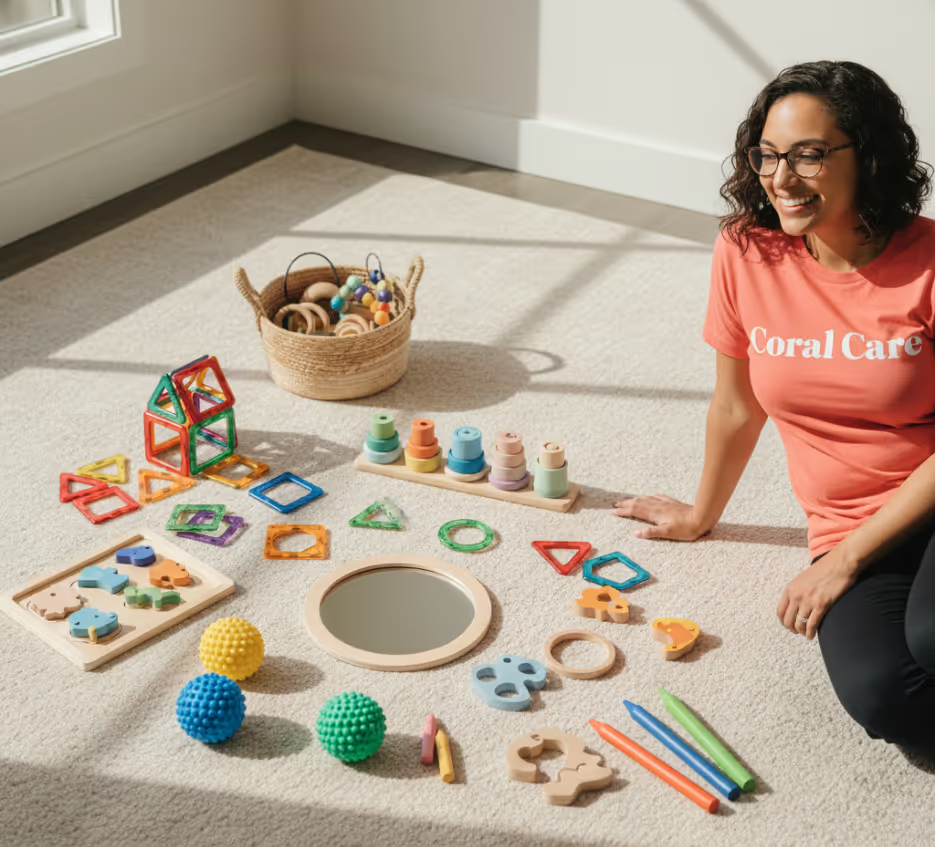
Pediatric therapist–approved toys that support real growth through play
Play is the foundation of childhood development. Long before kids learn letters or numbers, they learn by reaching, grasping, stacking, climbing, pretending, building, and exploring. The right toys don't entertain children. They help them grow.
At Coral Care, our pediatric speech, occupational, and physical therapists work with children every day, and we see exactly which toys spark connection, build new skills, and support milestone development at home.
Below is our age-by-age guide to the best developmental toys, chosen by clinicians and rooted in child development science. This list pairs perfectly with our 2025 Pediatric Developmental Gift Guide and our Milestone Guides, which you can explore for deeper support.
Why Developmental Toys Matter More Than “Entertainment Toys”
Not all toys are created equal. Battery-operated, screen-based, or novelty toys often do the work for the child, leaving less opportunity for problem solving, imagination, and real skill-building.
Developmental toys, on the other hand, are:
- Open-ended (can be used in many ways)
- Hands-on
- Sensory-rich
- Aligned with milestones
- Endlessly reusable as kids grow
These toys become tools for strengthening coordination, speech and language, motor planning, attention, emotional regulation, and creative thinking.
Best Developmental Toys by Age
Age 0–12 Months: Sensory, Movement, and Early Exploration
Babies learn through movement, repetition, and sensory experiences. The best toys at this age support tummy time, reaching, grasping, early communication, and visual engagement.
Top developmental toys for infants include:
- High-contrast books and cards
- Tummy-time mirrors
- Soft sensory balls
- Rattles and grasping toys
- Crinkle and texture books
- Floor gyms and activity arches
These toys build the foundation for fine motor skills, cause and effect, early strength, and emerging communication.
See the full list in our Infant Gift Guide section.
Age 1 (12–24 Months): Movement, Language Bursts, and Problem Solving
Toddlers learn by doing—climbing, dropping, banging, stacking, and imitating.
Top developmental toys for 1-year-olds include:
- Stacking cups
- Push toys and walkers
- Simple shape sorters
- Sensory bins
- Large wooden puzzles
- Toy kitchens and food sets
These toys support emerging speech, imitation skills, gross motor strength, and cognitive development.
Explore more in our Age 1 Gift Guide section.
Age 2: Big Feelings and Big Milestones
Two-year-olds are explorers full of movement and curiosity.
Best toys for age 2 include:
- Duplo blocks
- Climbing structures
- Simple ride-on toys
- Pretend-play sets
- Easy inset puzzles
- Play tunnels
These toys build emotional regulation, early problem solving, expressive language, and motor planning.
Explore more in our Age 2 Gift Guide section.
Age 3: Imagination and Early Learning
Three-year-olds enter a world of storytelling and pretend play.
Top toys for age 3 include:
- Dress-up outfits
- Playsets (farm, dollhouse, fire station)
- Wooden blocks
- Art supplies
- Simple board games
- Sensory play invitations
These toys support social skills, sequencing, flexible thinking, fine motor control, and early academics.
Explore more in our Age 3 Gift Guide section.
Age 4: Creativity, Collaboration, and Early Problem Solving
Four-year-olds build more complex ideas and love collaborative play.
Best toys for age 4 include:
- Magnetic tiles
- Beginner STEM kits
- Open-ended construction toys
- Play dough and tools
- Early board games with rules
These toys strengthen executive functioning, working memory, attention, and early math concepts.
Explore more in our Age 4 Gift Guide section.
Age 5: Independence, Planning, and Skill Expansion
Five-year-olds are ready for deeper creativity and structured play.
Top toys for age 5 include:
- Advanced magnetic tile sets
- Craft kits
- Marble runs
- Cooperative board games
- Building sets with steps
These toys support emotional regulation, social reasoning, fine motor precision, and early literacy skills.
Explore more in our Age 5 Gift Guide section.
Ages 6–8: Strategy, Creativity, and Emerging Identity
Children in this range begin to think more abstractly and stay engaged for longer periods.
Best toys for ages 6–8 include:
- STEM and engineering kits
- More advanced craft and art tools
- Strategy-based board games
- Sports equipment
- Creative writing or storytelling tools
These toys help strengthen planning skills, perseverance, executive functioning, and social development.
Explore more in our Age 6–8 Gift Guide section.
How to Choose the Right Developmental Toys for Your Child
When selecting toys, look for those that:
- Invite open-ended play
- Encourage movement or manipulation
- Offer sensory richness
- Support your child's current milestone stage
- Grow with your child over time
- Promote connection and shared play
If you're unsure what milestones your child should be working on, explore:
- Coral Care's Developmental Milestone Guides
- Our Pediatric Developmental Screener
- Or book directly to connect with a local therapist
Explore the Full Coral Care 2025 Pediatric Developmental Gift Guide
Whether you're building a playroom, choosing holiday gifts, or supporting a child's developmental needs, our guide offers therapist-approved toys for every age and ability.
👉 Explore the full guide here: https://www.joincoralcare.com/gift-guide
👉 Explore milestones by age here: https://www.joincoralcare.com/resources
Because the best gifts don't light up.
They light kids up.
Frequently Asked Questions
What’s the difference between a developmental toy and an entertainment toy?
Developmental toys are open-ended, hands-on, sensory-rich, and aligned with milestones — they invite the child to do the cognitive or physical work. Entertainment toys often do the work for the child: they light up, make sounds, or play on screens. While entertainment toys aren’t inherently harmful, they offer fewer opportunities for real skill-building. The best developmental toys grow with the child and remain useful across multiple stages.
What are the best toys for infants under 12 months?
Babies learn through movement, repetition, and sensory input. The most useful toys at this stage support tummy time, reaching, grasping, and early visual engagement — things like high-contrast books and cards, tummy-time mirrors, soft sensory balls, rattles, and floor gyms. These build the foundation for fine motor skills, cause and effect understanding, and early communication.
When should I introduce building toys like magnetic tiles or STEM kits?
Around age 4, children are ready for magnetic tiles and beginner STEM kits — toys that strengthen executive functioning, working memory, attention, and early math concepts. By ages 5–6, more advanced sets, marble runs, and cooperative board games support deeper problem-solving and planning. These toys remain valuable well into early school age as the child’s capabilities and the play naturally grow more complex.
How do I know if a toy is right for my child’s developmental stage?
The best approach is to look at where your child is developmentally, not just their age. Check what milestones your child is currently working on — our Developmental Milestone Guides break this down age by age. If you’re unsure whether your child is on track or might benefit from extra support, our online developmental screener is a helpful starting point.
Frequently Asked Questions
Shape sorters, stacking rings, simple puzzles, push-and-pull toys, large Duplo blocks, and toy kitchens or tool sets are all high-value for toddlers. This age group benefits from toys that require problem-solving, imitation, and manipulation with both hands. Avoid toys with too many electronic functions — they tend to reduce the child's active participation.
High-contrast visual cards and mobiles for early visual tracking, textured teethers and rattles for oral and tactile exploration, activity gyms for tummy time and reaching, soft squeeze toys for early grasping, and simple cause-and-effect toys like pop-up boxes. The most valuable "toy" for an infant is consistent, responsive face-to-face interaction with a caregiver.

.avif)
