.avif)

Coral Care content is reviewed and approved by our clinical professionals so you you know you're getting verified advice.
Find effective support for developmental delays, quickly.

Concerned about your child's development?
Our free screener offers guidance and connects you with the right providers to support your child's journey.
Every child develops at their own pace, but when it comes to speech and language milestones, early intervention can make all the difference. At Coral Care, we understand that noticing potential speech delays in your toddler can feel overwhelming. That’s why we’ve made it simple to connect with experienced pediatric speech-language pathologists who provide care right in your home—where your child feels most comfortable and is most likely to thrive.
In this guide, you’ll learn about the signs of speech delay, how early speech therapy works, and why getting help sooner rather than later can make a significant difference in your child’s development.
What Is Speech Therapy for Toddlers?
Speech therapy for toddlers is a specialized form of treatment designed to help children develop or improve their communication skills. Speech-language pathologists (SLPs) work with children on various aspects of communication, including:
- Articulation: How sounds and words are formed
- Language comprehension: Understanding what others are saying
- Expressive language: Using words to communicate thoughts and needs
- Social skills: Learning to communicate in social situations
- Fluency: The rhythm and flow of speech
- Voice quality: Pitch, volume, and quality of speech
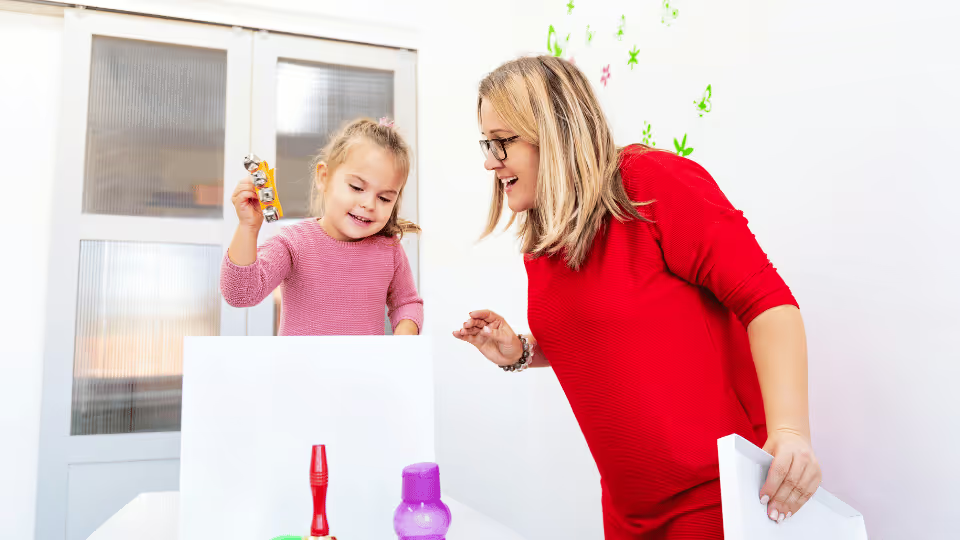
For toddlers, speech therapy is typically play-based and highly engaging. The goal is to make learning fun while targeting specific communication skills.
Signs Your Toddler May Need Speech Therapy
It’s natural to wonder if your toddler’s speech and language development is on track. While every child develops at their own pace, there are certain milestones that can signal a need for professional evaluation:
12 Months
- Not babbling or making various sounds
- Not using gestures like pointing or waving
- Not saying any words
18 Months
- Not using at least 10 words
- Unable to point to familiar objects when named
- Not imitating sounds or words
24 Months
- Not using at least 50 words
- Not combining two words ("more juice," "daddy go")
- Difficulty being understood by familiar adults
36 Months
- Not using sentences of three or more words
- Strangers can understand less than 75% of what they say
- Not able to tell simple stories or recount events
If your child shows any of these signs, it’s worth consulting with a speech-language pathologist for an evaluation. Early intervention is key to helping children reach their communication potential.
Benefits of Early Speech Therapy
Research consistently shows that early intervention produces the best outcomes for children with speech and language delays. Here’s why:
Neurological Development
The first three years of life are a critical period for brain development. During this time, neural connections form rapidly, making it easier for children to learn new skills, including language. Early therapy takes advantage of this neuroplasticity to help children develop communication skills more effectively.
Preventing Secondary Issues
Untreated speech and language delays can lead to additional challenges, such as:
- Academic difficulties
- Social problems
- Behavioral issues stemming from frustration
- Low self-esteem
By addressing communication delays early, you can help prevent these secondary issues from developing.
Building a Strong Foundation
Early speech therapy helps build the foundation for future learning. When children can communicate effectively, they’re better equipped to learn at school, form friendships, and engage with the world around them.
What to Expect During Your Child’s First Speech Therapy Session
At Coral Care, our in-home speech therapy sessions are designed to be comfortable and effective for both children and families. Here’s what you can typically expect:
Initial Evaluation
The first session usually involves a comprehensive evaluation of your child’s communication skills. The SLP will:
- Review your child’s developmental history
- Assess their understanding of language
- Evaluate their ability to express themselves
- Observe their play and social interaction
- Assess any feeding or swallowing concerns if applicable
Treatment Planning
Based on the evaluation, the therapist will develop an individualized treatment plan. This plan will outline:
- Specific goals for your child’s speech and language development
- Recommended frequency and duration of therapy sessions
- Strategies you can use at home to support progress
Ongoing Sessions
Regular therapy sessions will focus on working toward your child’s specific goals through play-based activities and targeted exercises. The therapist will regularly reassess progress and adjust the treatment plan as needed.
How to Support Your Child’s Speech Development at Home
While speech therapy is crucial, what happens between sessions is equally important. Here are some strategies to support your child’s speech and language development at home:
Read Together
Reading with your child is one of the most effective ways to promote language development. Try to:
- Read daily, even for just a few minutes
- Choose books with repetitive phrases and rhymes
- Point to pictures and name them
- Ask questions about the story
Talk Constantly
Narrate your daily activities, describe what you see, and talk about what you’re doing. This exposes your child to a rich language environment and helps them understand how language works.
Play Interactive Games
Interactive games and play activities naturally encourage communication. Try:
- Peek-a-boo and other simple games
- Pretend play scenarios
- Puzzles and matching games
- Singing songs and nursery rhymes
Follow Your Child’s Lead
Pay attention to what your child is interested in and use those interests to encourage communication. If they’re fascinated by cars, talk about cars, read books about cars, and play with toy cars together.
Frequently Asked Questions
When should I be concerned about my toddler’s speech?
Parents should consult a speech-language pathologist if their toddler is not meeting typical milestones: no first words by 12–15 months, fewer than 50 words by 24 months, or not combining two words by age 2. If strangers can’t understand most of what your 3-year-old says, that’s also a signal to seek an evaluation. Trust your instincts—early evaluation is always better than a wait-and-see approach.
Does speech therapy really work for toddlers?
Yes. Research consistently shows that early speech therapy produces meaningful improvements in language development, especially when started before age 3. In-home therapy—like the kind Coral Care provides—tends to be especially effective because children are more comfortable and engaged in familiar environments.
How long does a toddler typically need speech therapy?
Duration varies based on the child’s needs and goals. Some children make significant progress in a few months; others benefit from longer-term support. Your speech-language pathologist will set specific goals and reassess regularly so therapy is always targeted and purposeful.
Can I do speech therapy activities at home between sessions?
Absolutely—and it’s highly encouraged. Your Coral Care therapist will give you practical strategies and activities to practice between sessions. Things like narrating daily routines, reading together, singing songs, and following your child’s lead in play all reinforce what’s being worked on in therapy.
How Coral Care Can Help
At Coral Care, our in-home pediatric therapy provider offering speech therapy services for toddlers and children of all ages. Our experienced SLPs specialize in pediatric speech and language development and provide therapy right in your home.
We believe that early intervention is crucial, and we’re committed to making quality speech therapy accessible to all families. With Coral Care, you can expect:
- Experienced, licensed speech-language pathologists
- Individualized treatment plans tailored to your child’s needs
- Convenient in-home therapy sessions
- Regular communication and progress updates
- Guidance on how to support your child’s development between sessions
If you’re concerned about your toddler’s speech development, don’t wait. Contact Coral Care today to schedule an evaluation and take the first step toward supporting your child’s communication journey.
At Coral Care, our local pediatric therapists deliver care in the comfort of your home.
Book online. Click Get Started, call, or text: 617-463-9342
Frequently Asked Questions
You can still request a speech evaluation directly—no need to wait.
Home strategies help, but a professional evaluation ensures your child gets the right kind of support.
Often yes, but it varies. Early Intervention is free or low-cost in most states.
Most kids make progress within a few months, but meaningful growth usually happens over 6–18 months depending on needs.