
Coral Care content is reviewed and approved by our clinical professionals so you you know you're getting verified advice.
Find effective support for developmental delays, quickly.

Concerned about your child's development?
Our free screener offers guidance and connects you with the right providers to support your child's journey.
If play at home feels chaotic, scattered, or short-lived, it’s easy to assume something is “wrong” with your child or that they need more stimulation.
What we see clinically is often the opposite.
Many children struggle to settle into play when their environment is doing too much. Too many toys, too many choices, and too much visual input can overwhelm a child’s nervous system and make it harder to focus, regulate, and engage.
Toy rotation is a simple, flexible strategy pediatric occupational therapists often recommend to support calmer play, longer attention, and more independence at home.
This guide explains why toy rotation works, how to do it in a realistic way, and how to combine toy rotation with an organized playroom that actually stays functional.
What Is Toy Rotation (Really)?
Toy rotation doesn’t mean getting rid of toys or embracing minimalism.
Toy rotation simply means:
- Keeping a smaller selection of toys accessible at one time
- Storing the rest
- Swapping toys in and out based on your child’s interests and needs
The goal isn’t fewer toys overall.
The goal is a play environment that supports regulation and engagement.
Why Toy Rotation Helps Kids Play Better
From a pediatric OT perspective, play is deeply connected to the nervous system.
When too many toys are out at once, we often see:
- Short, scattered play
- Constant switching between toys
- Increased frustration or dysregulation
- Difficulty playing independently
A simplified environment can:
- Reduce sensory overload
- Support longer attention
- Encourage creativity and problem-solving
- Make independent play feel more achievable
Toy rotation can be especially helpful for children who struggle with focus, transitions, sensory processing, or big emotions.
How Many Toys Should Be Out?
There’s no magic number.
Rather than counting toys, occupational therapists encourage parents to think about variety and balance. A small, intentional mix often works better than a full shelf.
Many families find that about 5–8 toys is a helpful starting point, but what matters more is what those toys support, not the exact number.
Rotate Toys by Skill, Not Just Category
Instead of rotating by themes (all vehicles, all puzzles), think about how your child uses their body and brain during play.
A balanced play space often includes toys that support:
- Fine motor skills
- Gross motor movement
- Sensory input
- Pretend or imaginative play
- Problem-solving and planning
- Bilateral coordination (using both sides of the body)
This approach supports whole-child development and gives kids multiple ways to regulate through play.
Follow Your Child’s Interests
Your child’s interests are one of the best guides for toy rotation.
If a toy is being used repeatedly, it’s likely supporting an important developmental or regulatory need.
If a toy is being ignored, it’s okay to put it away for now.
Rotation isn’t removal.
It’s about timing.
When toys reappear weeks later, they often feel brand new.
Toys That Don’t Always Need Rotating
Some toys grow with children across ages and stages and work well as “always available” options.
These often include:
- Blocks
- Balls
- Figurines
- Stacking toys
- Play fabrics or scarves
These open-ended toys support creativity, problem-solving, and regulation without overwhelming play.
How Often Should You Rotate Toys?
You don’t need a strict schedule.
Many families rotate toys every 2–4 weeks, but the most important cue is your child, not the calendar.
You might consider rotating when:
- Toys aren’t being used
- Play feels scattered or chaotic
- Your child seems bored or dysregulated
- Cleanup becomes especially difficult
Behavior is communication. Changes in play often signal that the environment needs adjusting.
How an Organized Playroom Can Make Toy Rotation Easier
Toy rotation and organization are not opposites. In fact, having a clear system often makes rotating toys much easier.
Here’s an approach we love from one of the most organized moms we know — a system that keeps toys visible, calm, and functional without feeling cluttered.
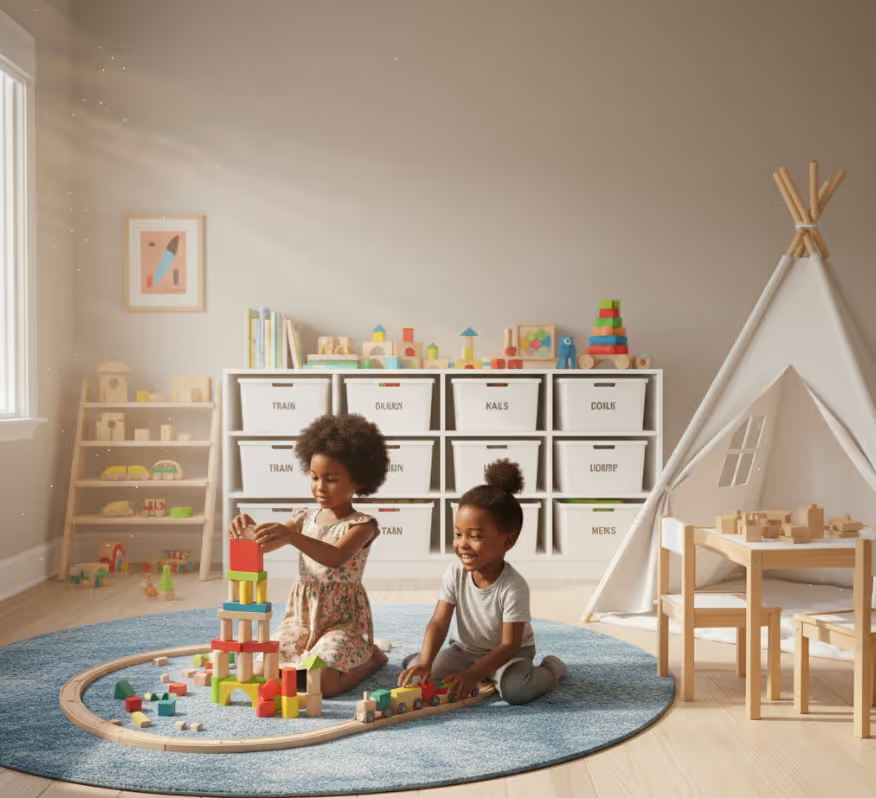
Wall Shelving + Bin Rotation
Wall shelving helps maintain visual order while still giving kids independence.
A simple system:
- Keep active toys on lower shelves where kids can access them
- Store rotated toys in bins on upper shelves
- Swap bins down as interests change
The shelves stay visually consistent, even as toys rotate.
Favorite storage bins
The Y Weave white plastic baskets from Target are a favorite for toy storage:
- You can still see what’s inside
- They feel clean and cohesive when lined up
- They’re lightweight and durable
- A simple tag makes labeling easy
From across the room, everything looks organized without hiding toys completely.
Let Kids See Craft Options (Without the Mess)
Instead of storing craft kits out of sight, lining them up on higher shelves allows kids to:
- See what’s available
- Ask to do a specific craft
- Make intentional choices
This reduces impulse dumping and turns crafts into planned activities rather than constant clutter.
LEGO and Craft Supply Organization We Love
For small pieces, modular storage matters.
The IKEA Kallax system works especially well for:
- LEGO organization
- Craft supplies
- Mixed-use bins that evolve as kids grow
It’s flexible, visually calm, and easy to adapt over time.
Use Soft Baskets for Big, Open-Ended Toys
Not everything needs a rigid container.
Soft woven floor baskets work beautifully for:
- Dolls
- Large block collections
- Train tracks
- Stuffed animals
They keep bulky toys contained while still feeling warm and inviting in the space.
The Zone Strategy: Organizing by How Kids Play
One of the most effective organization strategies we see is zoning — creating intentional spaces based on play type.
This works in both small and large playrooms.
Examples include:
- Pretend kitchen zone: Cooking and eating toys near the play kitchen
- Art zone: Craft supplies near a small table
- Dress-up zone: Costumes near a wall mirror
- Open-ended play zone: Blocks and loose parts near a rug or play mat
Zoning helps:
- Reduce toy migration
- Make cleanup more intuitive
- Support longer, more focused play
Learn more about the Zone Strategy: https://www.joincoralcare.com/blog/zone-strategy-playroom-setup
Donating Toys Your Child Has Outgrown
Toy rotation often highlights which toys your child has outgrown physically, developmentally, or interest-wise.
Donating those toys can:
- Reduce long-term clutter
- Make space for toys that are actually being used
- Help other families access play resources
Places to consider donating:
- Local family or women’s shelters
- Community centers or after-school programs
- Preschools, daycares, or therapy clinics
- Buy Nothing or neighborhood parent groups
- Children’s hospitals (for new or gently used items — always check guidelines)
Involving kids in the donation process can also be a meaningful way to build generosity and closure around outgrown items.
Organization Is a Tool, Not the Goal
An organized playroom doesn’t mean you’re parenting “better.”
It simply creates an environment that supports regulation, independence, and play.
Toy rotation isn’t about doing more.
It’s about making play feel easier — for kids and parents alike.
How Coral Care Can Help
At Coral Care, our pediatric occupational therapists support children in their real environments, including how play works at home.
If your child struggles with independent play, focus, regulation, or sensory needs, an OT can help uncover what’s underneath the behavior and offer practical strategies that fit your family. Click Get Started to search for a local occupational therapist.
Frequently Asked Questions
Many meltdowns are triggered by sensory overwhelm or a dysregulated nervous system — and the play environment is a major input. Too many toys out at once, poor lighting, loud toys, or no designated calm space all increase dysregulation. A well-organized, sensory-informed play space reduces those inputs proactively, giving the nervous system a better baseline before a hard moment arises.
Toy rotation is a system where only a subset of your child's toys are available at any given time, with others stored and periodically cycled in. OTs recommend it because novelty increases engagement and focused play, while reducing the overwhelm of too many choices. Fewer toys in the environment also supports sensory regulation and more sustained, imaginative play.