




Coral Care content is reviewed and approved by our clinical professionals so you you know you're getting verified advice.
Find effective support for developmental delays, quickly.

Concerned about your child's development?
Our free screener offers guidance and connects you with the right providers to support your child's journey.
Winter can feel harder for families.
Kids are inside more. Recess gets shortened or disappears. Free movement drops off. And suddenly, emotions feel bigger, patience is thinner, and behavior changes in ways parents don't always expect.
What's often missing isn't better routines, firmer boundaries, or more structure.
It's movement.
Why movement is the foundation of regulation
Movement is how kids reset their bodies and brains.
When children move, their nervous systems get important input that helps them feel organized, steady, and ready to engage. This supports:
- attention and focus
- emotional regulation
- impulse control
- cooperation
Movement isn't just "getting the wiggles out." It's how the brain resets.
During the school year, kids naturally get movement through:
- recess and gym
- walking between classrooms
- playground time
- unstructured outdoor play
In winter, much of that disappears. Energy builds up quickly, and behavior is often the first thing parents notice.
Why some kids need more movement than others
All kids benefit from movement, but not all kids need the same amount.
Some children rely more heavily on movement to feel regulated. These kids may:
- seek fast or intense movement (running, crashing, spinning)
- struggle more when movement is limited
- seem calmer and more cooperative after active play
This isn't a behavior problem or a parenting issue. It's how their nervous system works.
When winter limits movement, these kids often feel it first.
Winter activities that actually help kids regulate
The goal of movement isn't to exhaust kids.
It's to give their bodies the input they're asking for.
These activities work indoors or outdoors and can be adapted across ages.
Outdoor winter movement
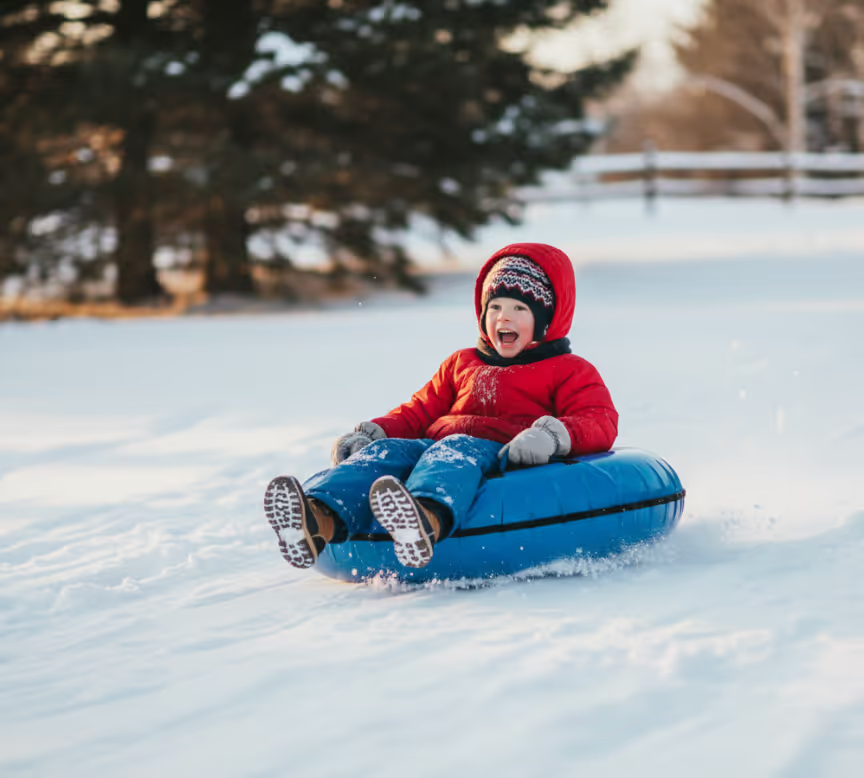
- Tubing or sledding
- Running games in the snow
- Climbing playground structures or snowbanks
- Shoveling snow together (real or pretend)
- Obstacle courses using natural terrain
Fast, full-body movement like this gives a lot of regulating input at once.
Indoor movement ideas
- Scooter rides down hallways
- Sidewalk chalk or tape obstacle courses
- Freeze dance
- Animal movement games (bear crawls, frog hops, crab walks)
- Hallway bowling using stuffed animals
- Pillow jumping or couch cushion obstacle courses
These work well for toddlers through elementary-aged kids and can be scaled up or down.
Movement that helps kids settle afterward
Some kids benefit from slower movement after big activity to help regulation last longer:
- Kids yoga
- Simple breathing games
- Stretching routines
- Slow animal walks
- Pushing or pulling heavy objects (laundry baskets, boxes, walls)
Pairing fast movement with slower movement often leads to better regulation overall.
How occupational therapists think about movement and regulation
Occupational therapists look at how a child's nervous system processes different types of movement and body input throughout the day.
Different kinds of movement give the brain different information. Some help kids feel more alert. Others help them feel calmer. Many kids need a mix of both, especially during winter.
Fast, full-body movement (like tubing, sledding, running)
Fast movement gives strong input to the balance system and helps the brain process changes in speed and position.
Parents often notice:
- kids feel calmer afterward
- emotions are less reactive
- transitions are easier
Heavy work (pushing, pulling, carrying)
Heavy work gives clear information to muscles and joints about where the body is in space.
Parents often notice:
- kids seem more grounded
- less impulsive behavior
- improved focus
Examples include carrying laundry baskets, pulling a sled, shoveling snow, or pushing against a wall.
Climbing and obstacle courses
Climbing combines strength, balance, coordination, and problem-solving.
Parents often notice:
- improved confidence
- better frustration tolerance
- more flexible behavior
Spinning and swinging (in small doses)
Some kids actively seek spinning or swinging because their nervous systems crave that input.
When offered intentionally and safely, parents may notice:
- improved mood
- better engagement afterward
Slow, controlled movement (yoga, stretching, breathing games)
Not all regulation comes from big movement.
Parents often notice:
- easier transitions to quiet activities
- smoother bedtime routines
- reduced emotional intensity
How often kids need movement in winter
In winter, movement should show up two to three times a day, not just once.
Helpful times include:
- before school or daycare
- mid-day or early afternoon
- late afternoon or early evening
When kids get consistent movement:
- focus improves
- emotions stabilize
- cooperation increases
If winter feels harder, this may be why
If your child's behavior shifts during winter, it doesn't mean something is wrong.
It may simply mean their body needs more movement than it's getting right now.
And for some kids, that need is bigger.
Want help figuring out what your child needs?
If you're unsure whether your child might benefit from extra support, Coral Care offers:
- an online developmental screener to help identify areas where your child may need support:
https://www.joincoralcare.com/online-screener - age-based developmental guides with practical, parent-friendly ideas:
https://www.joincoralcare.com/developmental-guide
These tools are designed to give parents clarity, not labels.
A final takeaway for parents
Movement isn't extra.
For many kids, especially in winter, it's essential.
Coral Care offers an alternative worth knowing about: licensed pediatric therapists who come directly to your home, so your child gets support in the environment where they spend most of their time. No clinic commute, no waiting room — just consistent, in-home care that fits your family's schedule.
Frequently Asked Questions
Why do kids seem harder to manage in winter?
In winter, kids lose access to much of the movement they'd normally get through recess, gym class, playground time, and outdoor play. When movement drops off, energy builds up quickly — and behavior is often the first thing parents notice. For most kids, the shift isn't about attitude or routine: it's about a nervous system that isn't getting the input it needs to feel organized and regulated.
How do I know if my child needs more movement than other kids?
Some children rely more heavily on movement to feel regulated. Signs include seeking fast or intense movement (running, crashing, spinning), seeming calmer and more cooperative after active play, and struggling more when movement is limited. This isn't a behavior problem — it's how their nervous system works. When winter limits movement, these kids often feel it first and most intensely.
What kinds of indoor movement actually help kids regulate?
The most regulating types of indoor movement include heavy work (pushing laundry baskets, carrying weighted objects, pushing against a wall), fast full-body play (obstacle courses, freeze dance, animal movement games), and proprioceptive input (bear crawls, wall push-ups, couch cushion climbing). Pairing big active movement with slower wind-down activity — like kids yoga or breathing games — often leads to better and longer-lasting regulation.
When should I consider an occupational therapy evaluation for my child's regulation challenges?
If your child's regulation difficulties are persistent — not just seasonal — and are affecting daily routines, school participation, or family life, an OT evaluation is worth considering. Occupational therapists can identify your child's specific sensory and movement needs and provide strategies tailored to how their nervous system works. At Coral Care, evaluations happen in your home, so the therapist sees your child in the environment where regulation challenges are most likely to show up.
Frequently Asked Questions
Kids who are sensory seekers have nervous systems that are under-responsive to proprioceptive and vestibular input — meaning they need more movement than typical to feel grounded and calm. For these children, movement isn't a distraction from regulation; it's how regulation happens. Restricting movement in an effort to get compliance often backfires for sensory-seeking kids.
Heavy work activities are especially effective in winter: shoveling snow, carrying firewood, building snowmen, and pulling siblings on sleds all provide the deep proprioceptive input that helps regulate the nervous system. Indoor alternatives include obstacle courses, animal walks, and jumping on a small trampoline. Five to ten minutes of heavy work before a demanding activity can significantly change a child's regulation level.


