This is some text inside of a div block.

In most cases, yes. Coral Care accepts most major insurance plans across our nine states. Coverage varies by plan and state — contact us and we'll check your benefits before your first session.

This is some text inside of a div block.

Convenience matters, which is exactly why in-home therapy exists. When a therapist comes to your home, you get everything telehealth promises — no commute, no waiting room, therapy in your child's natural environment, real family involvement — and your child still gets actual therapy. In-home in-person care is not a compromise between convenience and quality. It is both.

This is some text inside of a div block.

No. The need for physical guidance doesn't diminish as children get older. A seven-year-old working on handwriting, an eight-year-old with feeding challenges, a nine-year-old building fine motor strength — all of them need hands-on intervention. Virtual OT advocates sometimes frame older children as better candidates for telehealth because they can follow instructions. But following instructions and receiving therapy are two different things.

This is some text inside of a div block.

The honest read is mixed. The clearest post-pandemic data point: when researchers surveyed 132 pediatric OTs after restrictions lifted, the median rate of telehealth use had dropped to just 10% of their services. These are clinicians who did both. When they had a choice, nine out of ten went back in person. That is the research that matters most.

This is some text inside of a div block.

Mostly, you become the therapist. The OT watches through a camera and directs you — how to move your child's body, what input to provide, how to respond to what you're seeing. That coaching has value. But you were not trained to deliver occupational therapy, you cannot feel what a trained clinician feels, and you are also trying to be the parent at the same time. Research confirms this burden is real — studies found some caregivers reported increased stress and burnout from managing virtual OT sessions. For a child with active therapy goals, this model asks too much of parents and delivers too little to kids.

This is some text inside of a div block.

Because the work happens through the body, not through a screen. An OT working on handwriting can feel how a child grips a pencil and physically correct their hand position — a camera cannot. An OT working on feeding can assess oral motor function and texture responses up close in ways video cannot replicate. An OT working on sensory integration delivers deep pressure, vestibular input, and tactile stimulation that require physical contact. An OT working on dressing guides a child's hands through the motor sequence of buttoning, zipping, and fastening. Across almost every OT goal area, the most important clinical tool is the therapist's physical presence and hands — neither of which travels over a video call.

This is some text inside of a div block.

For a narrow set of goals, yes. Telehealth OT works for teaching parents strategies, checking in on home programs, and maintaining skills a child already built through in-person work. For everything else — sensory integration, fine motor development, feeding, handwriting, self-care skills, motor planning, regulation — the research is less encouraging. The clearest finding across multiple studies is that virtual OT's strongest evidence is in coaching parents, not in treating children directly. Those are not the same thing.

This is some text inside of a div block.

A lot more than most people expect. OT covers the full range of what children need to do every day: getting dressed, holding a pencil, eating without distress, sitting still long enough to learn, navigating a playground, regulating emotions when a plan changes. Specifically, pediatric OTs work on sensory processing, fine motor skills, gross motor development, handwriting, feeding and oral motor function, self-care, attention, emotional regulation, visual-motor integration, motor planning, and daily living skills. Most of these goals have one thing in common — they require a therapist whose hands are in the room.

This is some text inside of a div block.

For a narrow set of goals, yes. Telehealth OT works for teaching parents strategies, checking in on home programs, and maintaining skills a child already built through in-person work. For everything else — sensory integration, motor development, body awareness, regulation — the research is less encouraging. The clearest finding across multiple studies is that virtual OT's strongest evidence is in coaching parents, not in treating children directly. Those are not the same thing.

This is some text inside of a div block.

Virtual OT is therapy delivered over video call, where a licensed occupational therapist guides activities remotely. The therapist observes your child through a screen and coaches you or your child through exercises in real time. It expanded during the COVID-19 pandemic when in-person care wasn't an option — and for many families, it was better than nothing. But better than nothing is a low bar when your child has real sensory or motor needs.

This is some text inside of a div block.

Don't wait. Start with our free developmental screener to get a clearer picture of where your child stands. If you have concerns, reach out to your pediatrician and consider self-referring to Coral Care — the earlier a child gets support, the better the outcomes.

This is some text inside of a div block.

Speech therapy addresses communication — including talking, understanding language, and in some cases feeding and swallowing. Occupational therapy focuses on the skills children need to participate in daily life: fine motor skills, sensory processing, self-care tasks like dressing and eating, and attention. Many children benefit from both, which is why Coral Care offers them together.

This is some text inside of a div block.

Yes — they're not mutually exclusive. Some families work with Coral Care while waiting for public services to begin, and others use us alongside their public EI services. Our goal is to make sure your child isn't losing critical development time while paperwork and waitlists sort themselves out.

This is some text inside of a div block.

Yes. Coral Care works with insurance so that families can access in-home speech and occupational therapy without paying out of pocket. We'll help you understand your coverage when you reach out.

This is some text inside of a div block.

No. Families can self-refer directly to Coral Care. You don't need a doctor's order or a referral from the public EI system. Just reach out and we'll take it from there.

This is some text inside of a div block.

Coral Care is a pediatric therapy company providing in-home speech therapy and occupational therapy for children across the Philadelphia region. Unlike the public early intervention system, we don't have a waitlist families have to navigate. We come directly to your child — at home or at school — and we work with insurance so families aren't paying out of pocket.

This is some text inside of a div block.

Philadelphia's early intervention system — particularly the preschool program for children ages 3–5 run through Elwyn — is significantly under-resourced relative to demand. There's a shortage of qualified therapists, and the administrative process can be slow. Families who are legally entitled to services are waiting months, sometimes longer. It's a real and documented problem, and it's part of why private providers like Coral Care exist.

This is some text inside of a div block.

A team of specialists will assess your child across multiple developmental areas — communication, motor skills, cognition, and social-emotional development. It's not a test your child can pass or fail. The evaluation is designed to understand where your child is and what support would help them thrive. Results are shared with you, and if your child is eligible, you'll work with the team to build an Individualized Family Service Plan (IFSP) or Individualized Education Program (IEP).

This is some text inside of a div block.

In Pennsylvania, anyone can make a referral — you don't need a doctor's order. You can contact your pediatrician, call the statewide CONNECT line, or reach out directly to your local early intervention program. In Philadelphia, that's the Infant Toddler EI program (birth to 3) at 215-685-4646, or Elwyn Early Learning Services (ages 3–5) at 215-222-8054. You can also self-refer directly to Coral Care and we'll help guide you from there.

This is some text inside of a div block.

Any child from birth to age five who has a developmental delay or disability, or is at risk for one, may be eligible. You don't need a diagnosis to request an evaluation — a concern is enough to get the process started.

This is some text inside of a div block.

Early intervention is a federally mandated system of support for children from birth through age five who have developmental delays or disabilities. Services can include speech therapy, occupational therapy, physical therapy, and specialized instruction. The goal is to address delays during the earliest — and most critical — window of brain development, when support is most effective.

This is some text inside of a div block.

Early Intervention (EI) is a federally funded program providing free or low-cost evaluations and therapy for children under 3 with developmental delays. It's services-based and family-centered, often delivered in the home. Private therapy (including in-home providers like Coral Care) operates outside EI and is billed through insurance. Private therapy typically offers more scheduling flexibility, faster access, and the ability to continue beyond age 3 without the EI eligibility cutoff. Many families use both simultaneously.

This is some text inside of a div block.

Feeding and swallowing therapy addresses difficulty with eating, drinking, or managing food safely — including chewing challenges, swallowing dysfunction, texture aversions, oral motor weakness, and sensory-based food refusal. It's provided by SLPs (for swallowing mechanics and oral motor function) and OTs (for sensory and behavioral aspects of feeding). For children with significant feeding challenges, co-treatment between OT and SLP often produces the best results.

This is some text inside of a div block.

Signs include: not walking by 15 months, walking on tiptoes consistently past age 2, frequent falls significantly beyond what peers experience, asymmetrical crawling or movement patterns, avoiding physical play, low muscle tone (feeling floppy), difficulty climbing stairs, and not keeping up with peers physically. Any of these patterns warrants a conversation with your pediatrician and a referral for a PT evaluation.

This is some text inside of a div block.

The brain is most plastic — most responsive to intervention — in the first three to five years of life. Early intervention leverages this neurological window to build skills before compensatory patterns become entrenched and before delays compound. Children who receive early intervention consistently show better outcomes than those who wait. The cost of waiting is real: delayed speech at 18 months becomes a bigger gap at 36 months without intervention.

This is some text inside of a div block.

If your child is behind on speech milestones, hard to understand for their age, frustrated by their inability to communicate, avoiding verbal interaction, or showing regression in speech skills, a speech evaluation is warranted. You don't need a pediatrician's referral — you can contact an SLP directly or request Early Intervention for children under 3. An evaluation gives you clarity; it doesn't commit you to a course of treatment.

This is some text inside of a div block.

Pediatric OT helps young children develop the skills they need to participate in their daily "occupations" — play, learning, self-care, and interaction. For infants and toddlers this means fine motor development, sensory processing, feeding skills, and early self-care. For preschoolers it expands to include pre-handwriting skills, emotional regulation, and school readiness. OT for young children is always play-based, family-centered, and tied to functional goals that matter in daily life.

This is some text inside of a div block.

PT-recommended home products include: mini trampolines with handle bars for vestibular and strength work, balance boards and wobble cushions for proprioceptive input, therapy balls for core strengthening, resistance bands sized for children, stepping stones for balance, and foam rollers for body awareness. Your child's PT can recommend specific products based on their goals and will show you how to use them effectively as part of a home exercise program.

This is some text inside of a div block.

OT targets the developmental skills kindergarten demands: fine motor skills for writing and cutting, emotional regulation for managing transitions and group demands, sensory processing for tolerating a busy classroom environment, self-care independence (dressing, bathroom use, feeding), and attention for tabletop tasks. Starting OT before kindergarten — especially if there are known developmental concerns — gives children the most runway to build these foundations before academic expectations begin.

This is some text inside of a div block.

A Coral Care care coordinator helps families navigate the process of getting pediatric therapy — from verifying insurance benefits and matching families with the right therapist, to answering questions about next steps and supporting families through the intake process. They're the human touchpoint that makes the experience feel manageable rather than like navigating a fragmented healthcare system alone. Coordinators don't provide therapy — they make sure you can access it smoothly.

This is some text inside of a div block.

Behavioral therapy (most commonly ABA — Applied Behavior Analysis) uses principles of learning and reinforcement to teach new skills and reduce challenging behaviors. It's most commonly used with autistic children. OT addresses sensory, motor, and daily function; speech addresses communication; behavioral therapy addresses behavior and skill acquisition through structured reinforcement. They often complement each other and are used simultaneously for children with complex needs.

This is some text inside of a div block.

Research following the pandemic documented significant increases in language delays, social communication challenges, and motor delays in children born during or shortly before the pandemic. Reduced social interaction, limited face-to-face communication (due to masks), and loss of childcare and play-based learning all contributed. Many of these children responded well to early intervention once it was accessed. The lesson reinforced the importance of early identification and prompt referral.

This is some text inside of a div block.

Not necessarily on its own. Academic knowledge is only one piece of kindergarten readiness. The skills that most predict kindergarten success are social-emotional — managing frustration, separating from caregivers, following group instructions, and navigating peer relationships. A child who knows all their letters but melts down daily or can't sit in a group for 10 minutes may struggle more than a child with fewer academic skills and stronger regulation.

This is some text inside of a div block.

General benchmarks: 1–3 words by 12 months, 10–20 words by 18 months, 50+ words and beginning two-word combinations by 24 months, and 200+ words with simple sentences by 36 months. These are averages — variation exists. The more important signal is consistent forward progress. Any loss of words previously used is a red flag that warrants immediate evaluation regardless of current word count.

This is some text inside of a div block.

Tummy time builds the neck, shoulder, and core strength that underlies all subsequent motor development — rolling, sitting, crawling, and eventually walking. It also prevents positional plagiocephaly (flat head syndrome) from too much back-lying. Babies who get insufficient tummy time often show delays in motor milestones. The American Academy of Pediatrics recommends starting tummy time from the first day home from the hospital, with increasing duration as tolerated.

This is some text inside of a div block.

Start with short sessions (1–2 minutes) several times a day rather than one long stretch. Try tummy time on your chest rather than the floor — babies often tolerate it better with a caregiver's heartbeat and face nearby. Place a rolled towel under the chest to reduce strain. Use high-contrast toys or a mirror at eye level. As your baby gets stronger, increase duration. Most babies who resist tummy time improve quickly with consistent, short daily practice.

This is some text inside of a div block.

Play is the primary vehicle through which children develop motor skills, language, social-emotional competence, problem-solving, and self-regulation. The type of play that's most beneficial evolves with age: sensory and physical play in infancy, symbolic and pretend play in toddlerhood, rule-based play in preschool, and collaborative and creative play in school age. At every stage, child-led play in a supportive environment is more developmentally powerful than structured adult-directed activities.

This is some text inside of a div block.

Predictable routines provide the nervous system with structure that supports regulation — particularly important for children with sensory processing differences, ADHD, or anxiety. Morning routines prime the nervous system for the day ahead; evening routines signal winding down and prepare the brain for sleep. OTs often help families redesign routines when they're consistently dysregulating — sequencing, timing, and sensory content of routines all affect how they work.

This is some text inside of a div block.

Climbing develops upper body and core strength, bilateral coordination, problem-solving, body awareness, and risk assessment. It's one of the richest developmental activities available to children — and one that's disappearing from many school playgrounds. For sensory-seeking kids, climbing provides powerful proprioceptive and vestibular input. PTs and OTs frequently recommend climbing as a home or playground activity precisely because it addresses so many developmental domains simultaneously.

This is some text inside of a div block.

The first session is typically an evaluation — the PT observes how your child moves, assesses strength and range of motion, identifies functional challenges, and reviews your concerns. They'll play with your child to see how they naturally navigate their environment. You'll receive initial impressions and a plan for ongoing sessions. Subsequent sessions follow a consistent structure with active parent participation and home exercise coaching.

This is some text inside of a div block.

Pediatric PTs are skilled at using what's already in your home: stairs for step practice, couch cushions for balance and core work, laundry baskets for pushing and pulling (heavy work), pillows for obstacle courses, a ball for coordination, and a yoga mat for floor exercises. The advantage of in-home PT is that therapy happens with your actual environment, making skills immediately transferable to daily life.

This is some text inside of a div block.

A pediatric SLP evaluates and treats challenges with communication — speech sounds, language development, social communication, fluency, voice, and feeding and swallowing. They help children who are delayed in language, hard to understand, struggling with reading foundations, having difficulty in social situations, or who have feeding difficulties related to oral motor function. SLPs also work closely with families, coaching caregivers on strategies that support development between sessions.

This is some text inside of a div block.

A pediatric OT helps children participate more fully in the activities of daily life — play, learning, self-care, and social participation. They address fine motor delays, sensory processing differences, emotional regulation challenges, handwriting difficulties, feeding issues, and daily living skill gaps. OTs also collaborate with families and schools to design environments and routines that support the child's development between therapy sessions.

This is some text inside of a div block.

A pediatric PT evaluates and treats challenges related to movement, strength, balance, coordination, and physical endurance. They help children who struggle to walk, run, climb, or keep up with peers physically; who have conditions like cerebral palsy, hypotonia, or torticollis; or who need rehabilitation after injury or surgery. PTs also identify and address musculoskeletal asymmetries and postural issues before they become bigger problems.

This is some text inside of a div block.

An OT comes to your home and conducts therapy within your child's actual daily context — their bedroom, kitchen, bathroom, and play spaces. This allows direct observation of where challenges occur and enables therapy that transfers immediately to real routines. Sessions include hands-on treatment, parent education, and environmental modifications. Skills learned at home generalize better than skills learned in a clinic because they're practiced where life actually happens.

This is some text inside of a div block.

A pediatric PT visits your home on a regular schedule and conducts therapy using your child's own environment — your floors, stairs, furniture, yard, and the activities your child naturally does. This allows the therapist to design interventions around real daily challenges rather than clinic-based simulations. Sessions include direct treatment, caregiver coaching, and home exercise programs. In-home PT is billed to insurance the same as outpatient therapy.

This is some text inside of a div block.

An SLP comes to your home at scheduled appointment times and conducts therapy in your child's natural environment using your child's own toys, books, and daily routines as the therapy context. Sessions are play-based and parent-inclusive — the therapist coaches you on strategies to use between visits. Insurance billing works the same as outpatient clinic therapy. In-home SLP is covered by most major insurers and is often more effective for young children because skills are practiced where they'll actually be used.

This is some text inside of a div block.

Signs include: speech that's difficult for teachers or peers to understand, avoiding verbal participation in class, word-finding difficulties (frequent "um," pausing, or substituting words), social communication challenges (difficulty in conversations or group settings), stuttering, voice disorders, and reading or writing difficulties linked to phonological awareness. Teachers are often the first to notice these patterns across different classroom contexts.

This is some text inside of a div block.

Signs include: messy or illegible handwriting that doesn't improve with instruction, significant difficulty with scissors, buttons, or zippers, sensory sensitivities that disrupt classroom participation, emotional dysregulation that interferes with learning, avoidance of fine motor tasks, trouble with self-care tasks, and difficulty organizing materials or following multi-step instructions. Any of these patterns, when persistent, warrants a referral for OT evaluation.

This is some text inside of a div block.

Key signs include: frequent unexplained falls or clumsiness, difficulty keeping up with peers in physical activity, avoiding movement or physical play, significant asymmetry in how they use their body, complaints of pain or fatigue during ordinary activities, toe-walking, and poor core strength evident in posture or sitting endurance. Teachers often notice these signs first because they observe children across many physical contexts throughout the day.

This is some text inside of a div block.

Children progress through solitary play (playing alone, typical under age 2), parallel play (playing alongside but not with peers, 2–3 years), associative play (interacting with peers around shared materials without organized goals, 3–4 years), and cooperative play (organized games with rules and shared objectives, 4+ years). These stages don't replace each other — children move fluidly between them. Significant delays in progressing through stages can indicate social communication or developmental differences worth evaluating.

This is some text inside of a div block.

Frequency depends on the severity of your child's challenges, their goals, and what their insurance covers. Many children start with one to two sessions per week. As goals are achieved and home strategies become more established, frequency often decreases to maintenance or monitoring levels. Your child's OT will recommend a frequency based on their clinical judgment and adjust it as your child progresses.

This is some text inside of a div block.

An OT plan (also called a plan of care) outlines your child's evaluation findings, specific functional goals, the recommended frequency and duration of therapy, and the interventions that will be used to achieve those goals. Goals are tied to real-life outcomes — not abstract skills. The plan is reviewed and updated regularly based on your child's progress, and parents are integral to the planning process.

This is some text inside of a div block.

Look for a PT with specific pediatric experience and training — not all PTs specialize in children. Ask about experience with your child's specific diagnosis or presenting concerns. Boston families can search through Boston Children's Hospital's referral network, request recommendations from your pediatrician, or use in-home providers like Coral Care that specialize in pediatric PT and come directly to your home.

This is some text inside of a div block.

Fine motor skills involve the small muscles of the hands and fingers — used for grasping, writing, cutting, buttoning, and feeding. Gross motor skills involve the larger muscles of the body — used for walking, running, jumping, climbing, and balance. Both develop in tandem and influence each other: good core strength and stability (gross motor) provides the postural foundation for precise hand movements (fine motor). OTs typically address fine motor; PTs focus on gross motor, though there is overlap.

This is some text inside of a div block.

Key milestones include: grasping a finger reflexively at birth, reaching for objects at 3–4 months, transferring objects between hands at 6–7 months, using a raking grasp for small objects at 7–8 months, developing a pincer grasp (thumb and index finger) by 9–10 months, and intentionally releasing objects by 12 months. Delays in these milestones — especially if paired with low muscle tone or limited hand use — warrant an OT evaluation.

This is some text inside of a div block.

Pediatric OT supports development by addressing the skills children need to participate fully in daily life — play, learning, self-care, and social interaction. OTs work on fine motor development, sensory processing, emotional regulation, handwriting readiness, feeding skills, and adaptive behaviors. Because OT is always goal-driven, every activity in a session connects to a functional outcome your child works toward in real life.

This is some text inside of a div block.

By age 2, most children can stack 4–6 blocks, scribble with a crayon, turn pages of books, and feed themselves with a spoon with moderate mess. Concern is warranted if your child consistently avoids using their hands for play, shows significant weakness or decreased dexterity compared to peers, or has difficulty with self-care tasks like holding a cup or finger-feeding. An OT evaluation can clarify whether intervention is needed.

This is some text inside of a div block.

OT-recommended activities for 2-year-olds include: playdough squeezing and rolling, stacking large Duplo blocks, transferring small objects with a spoon or tongs, turning pages of board books, using chunky crayons to scribble and draw, and playing with large peg puzzles. The emphasis at this age is on developing bilateral coordination and functional grip — not precision. Messy play with sand, water, and food also builds tactile tolerance and hand strength.

This is some text inside of a div block.

The most effective home activities are those that embed speech practice into daily routines: labeling foods during meals, describing actions during play, reading books with repetitive language, singing songs with gestures, and practicing specific sounds your SLP has identified during bath time or car rides. Frequency and consistency matter more than duration — ten minutes of rich language interaction three times a day outperforms a single 30-minute session.

This is some text inside of a div block.

Options include: Early Intervention (free for children under 3 in all states), school-based SLP services through an IEP or 504, private outpatient clinic therapy, and in-home therapy through providers like Coral Care. Each setting has tradeoffs in terms of frequency, environment, and coverage. Most insurance plans cover medically necessary speech therapy — Coral Care verifies benefits before services begin so families know what to expect.

This is some text inside of a div block.

Effective pediatric speech therapy is play-based, family-centered, and goal-driven. Sessions involve structured activities targeting specific language, speech, or communication goals — wrapped in play, books, games, and activities the child finds motivating. Parents are active participants, not observers. A good SLP coaches you on home strategies between sessions and adjusts goals based on the child's progress. In-home therapy adds the advantage of working in the child's natural environment.

This is some text inside of a div block.

Development moves through predictable stages: cooing and babbling in infancy, first words around 12 months, two-word combinations around 24 months, simple sentences by 36 months, and complex sentences with grammar by age 5. By kindergarten, most children can tell stories, have conversations, and be understood by strangers. These are averages — consistent delay across stages, rather than missing a single milestone, is the key signal to watch.

This is some text inside of a div block.

The highest-impact daily habits are: narrating your day in simple language, reading aloud and pausing to talk about pictures, expanding on what your child says (child: "dog" → you: "big brown dog running"), reducing background noise during conversations, and giving your child unhurried time to respond. Singing, rhyming games, and pretend play are also strong language builders. Face-to-face interaction consistently outperforms apps and programs.

This is some text inside of a div block.

The SLP shares results with you, typically within a week, and recommends either: no services needed (with monitoring guidance), periodic monitoring, or active speech therapy. If therapy is recommended, they'll outline goals, frequency, and format. Insurance authorization usually follows for covered services. In-home speech therapy from providers like Coral Care can often begin within two to four weeks of evaluation.

This is some text inside of a div block.

Key signs include: speech that's difficult for familiar people to understand at age 3+, frustration when trying to communicate, avoiding talking or withdrawing from conversation, difficulty following directions, word-finding struggles, stuttering that's increasing rather than decreasing, and any regression in speech skills. You don't need a referral to request a speech evaluation — you can contact an SLP directly or request Early Intervention services if your child is under 3.

This is some text inside of a div block.

Part I covers the essentials: autism is a neurological difference affecting social communication, sensory processing, and flexible thinking. Autistic students are not a monolith — presentations vary widely. Key classroom priorities include predictability, clear communication, sensory accommodation, and neurodiversity-affirming language. Understanding that behavior is communication — and that meltdowns are not tantrums — is foundational to effective support.

This is some text inside of a div block.

Part II of this series covers advanced classroom support: understanding how to implement sensory accommodations effectively, navigating co-occurring conditions like anxiety and sensory processing differences, adapting instruction for different communication styles including AAC users, and building collaborative relationships with families. Effective support for autistic students requires understanding the individual — not applying a one-size-fits-all autism protocol.

This is some text inside of a div block.

Evidence-supported strategies include: preferential seating away from distractions, chunked assignments with frequent check-ins, movement breaks built into the schedule, clear and visual routines, minimal transitions, flexible seating options like wobble cushions, and immediate positive feedback on effort. Environmental modifications (reducing visual clutter, noise management) address the sensory layer that often compounds ADHD challenges in the classroom.

This is some text inside of a div block.

The most practically useful resources for special education teachers are: access to OT and SLP consultation for classroom strategies, visual schedule templates, co-regulation toolkits, disability-specific professional development, and strong IEP writing guides. Organizations like the Council for Exceptional Children (CEC), NASET, and state departments of education provide free teacher-facing resources. Collaboration with the child's outside therapy team is often the highest-value resource of all.

This is some text inside of a div block.

Teachers often notice: persistent difficulty following multi-step directions, significant fine motor struggles affecting written work, emotional dysregulation that interferes with learning, sensory responses that disrupt classroom participation, and social communication challenges. These observations are valuable — teachers see children across different contexts and over sustained time. Documenting specific examples and sharing them with the school's support team is the right first step.

This is some text inside of a div block.

An IEP provides specialized instruction and is governed by IDEA — it changes how or what a child is taught. A 504 Plan provides accommodations under civil rights law to remove access barriers, without changing curriculum. If your child needs the same content as peers but with supports (extra time, movement breaks), a 504 fits. If your child needs different instruction or in-school therapy, an IEP is appropriate.

This is some text inside of a div block.

An IEP (Individualized Education Program) is a legally binding plan developed by a school team that outlines specialized instruction and related services for a student with a qualifying disability. Your child may need one if they have a disability that adversely affects their educational performance and requires specialized instruction — not just accommodations. The IEP includes measurable annual goals, specific services, and designated supports that the school is legally obligated to provide.

This is some text inside of a div block.

Key strategies include: flexible seating and sensory accommodations, visual schedules and predictable routines, sensory breaks built into the day, clear and consistent communication, reduced auditory and visual clutter, and close collaboration with the child's therapy team. Teachers don't need to be therapists — they need to understand the child's specific needs and implement accommodations consistently. OTs and SLPs can provide classroom-specific recommendations as part of IEP or 504 services.

This is some text inside of a div block.

Yes — Coral Care accepts most major commercial insurance plans including Aetna, Cigna, UnitedHealthcare, BlueCross BlueShield, and others. Coverage varies by plan and state, so Coral Care verifies your specific benefits before services begin. Medicaid coverage is available in select states where Coral Care is credentialed. You can start the process by requesting a benefits check through the Coral Care website.

This is some text inside of a div block.

Coral Care handles insurance verification, prior authorization, billing, and claims on behalf of families. After an initial benefits check, families receive a clear estimate of any out-of-pocket costs before services begin. Coral Care accepts most major commercial insurance plans and works with Medicaid in the states where it operates. Families don't deal with insurance paperwork directly — Coral Care manages the process end-to-end.

This is some text inside of a div block.

Austin families can access free Early Intervention evaluations through Texas ECI for children under 3, special education evaluations through Austin ISD, and Texas CHIP for therapy coverage. Community resources include Austin Child Guidance Center and various nonprofit early childhood programs. In-home pediatric therapy through Coral Care is also available across the Austin metro.

This is some text inside of a div block.

Boston-area parents have access to the Massachusetts Early Intervention program, Boston Public Schools special education, the Federation for Children with Special Needs, PPAL (advocacy support), Autism Alliance of Metro Boston, and in-home pediatric therapy through providers like Coral Care. MassHealth covers a broad range of pediatric services, and many Boston families qualify for services they aren't yet accessing. The Mass211 resource line can help families identify local support.

This is some text inside of a div block.

Houston parents have access to the Texas ECI program (free evaluations and therapy for children under 3), HISD and surrounding district special education services, Texas CHIP for insurance coverage, and the Autism Society of Greater Houston for support and navigation. In-home pediatric therapy through providers like Coral Care is available across the Houston metro. The Harris County Protective Services also offers family support programs.

This is some text inside of a div block.

Boston families have access to pediatric speech therapy through Boston Children's Hospital, MGH for Children, private practices, and in-home providers. Massachusetts Early Intervention covers SLP services for children under 3. MassHealth and commercial insurers cover pediatric speech therapy. Boston has strong bilingual SLP capacity in Portuguese and Spanish. In-home SLP from Coral Care is a convenient option for Boston-area families.

This is some text inside of a div block.

Austin families can access pediatric speech therapy through Dell Children's, private practices, and in-home providers. Texas ECI covers speech therapy for children under 3 at no cost. Texas CHIP and commercial insurance both cover pediatric SLP services. Austin has a growing demand for bilingual SLPs, particularly Spanish-English, reflecting the city's demographics. In-home SLP from Coral Care is available for Austin families.

This is some text inside of a div block.

Houston families can access pediatric speech therapy through Texas Children's Hospital, private clinics, and in-home providers like Coral Care. The Texas ECI program provides free speech evaluations and services for children under 3. Texas CHIP, Medicaid, and most commercial insurers cover pediatric speech therapy. Houston has strong demand for bilingual Spanish-English SLPs, and some providers specialize in this population.

This is some text inside of a div block.

Boston-area families have access to pediatric OT through Boston Children's Hospital, Franciscan Children's, local private practices, and in-home providers. Massachusetts Early Intervention provides free OT for children under 3. MassHealth and most commercial insurers cover pediatric OT. In-home OT from providers like Coral Care offers therapy in your child's natural environment, which is often more effective for sensory and daily living skill work.

This is some text inside of a div block.

Austin families can access pediatric OT through Dell Children's Medical Center, local private clinics, and in-home providers. The Texas ECI program provides free OT evaluations and services for children under 3. Texas CHIP and Medicaid cover pediatric OT for eligible families. In-home OT from providers like Coral Care is a strong option for Austin families who want therapy in their child's natural environment.

This is some text inside of a div block.

Houston families can access pediatric OT through Texas Children's Hospital, private clinics, and in-home providers. Early Intervention through ECI provides free OT for children under 3. Texas Medicaid and CHIP cover pediatric OT, and most commercial insurers do as well. In-home OT from providers like Coral Care is often the most practical option for Houston families given the city's geographic spread.

This is some text inside of a div block.

Boston families can access pediatric PT through Boston Children's Hospital, Spaulding Rehabilitation, and private in-home providers. Massachusetts Early Intervention covers PT for children under 3 at no cost. MassHealth and most commercial insurers cover pediatric PT. In-home pediatric PT through providers like Coral Care offers therapy in your home without clinic commutes, which many Boston-area families find more sustainable.

This is some text inside of a div block.

Houston families have access to pediatric physical therapy through Texas Children's Hospital, Memorial Hermann, and private in-home providers. For children under 3, the Texas Early Childhood Intervention (ECI) program provides free PT evaluations and services. Private insurance and Medicaid through Texas CHIP both cover pediatric PT. In-home providers like Coral Care serve Houston families with licensed PTs who come directly to your home.

This is some text inside of a div block.

Boston families have access to the Massachusetts Early Intervention program (free evaluations and services for children birth to 3), special education services through Boston Public Schools, and MassHealth coverage for pediatric therapy. Additional community resources include Boston Children's Hospital's developmental programs, The Federation for Children with Special Needs, and PPAL (Parent/Professional Advocacy League), which helps families navigate the special education system.

This is some text inside of a div block.

Austin families can access free Early Intervention evaluations and services through the Texas Early Childhood Intervention (ECI) program for children under 3. School-aged children can request evaluations through Austin ISD at no cost. Medicaid-eligible families receive pediatric therapy coverage through Texas CHIP. Austin also has community resources through Austin Child Guidance Center and various nonprofit early childhood organizations.

This is some text inside of a div block.

Boston-area families can access Early Intervention through the Massachusetts EI program (free for children under 3), school-based services through Boston Public Schools and surrounding districts, and private in-home pediatric therapy through providers like Coral Care. Massachusetts has strong commercial insurance coverage, and MassHealth covers pediatric therapy services. The Children's Hospital Boston network also provides specialized evaluations.

This is some text inside of a div block.

Houston families have access to Early Intervention through Texas Health Steps (free for children under 3), school-based therapy through HISD and surrounding districts, and private in-home pediatric therapy through providers like Coral Care. Texas has strong Medicaid coverage through CHIP and Medicaid managed care plans. If your child is under 3, contact the Texas ECI program directly to request a free evaluation.

This is some text inside of a div block.

You don't need a pediatrician's referral to access a speech, OT, or PT evaluation. You can contact providers directly or request an Early Intervention evaluation (free for children under 3 in all states) without a referral. Document your concerns in writing over time. If your child is school-aged, contact the school district to request a special education evaluation — they are required to respond within a specific timeframe.

This is some text inside of a div block.

Be specific and concrete rather than general. Instead of "I'm worried about development," say "She's 18 months and has fewer than 10 words, and I want to understand if that's typical." Bring written notes so you don't forget in the moment. If you're told to "wait and see" and your instinct says otherwise, you have every right to ask for a referral for an evaluation or to seek one independently.

This is some text inside of a div block.

Yes — occupational therapy using sensory integration principles is the primary evidence-based treatment for sensory processing differences in children. OTs design individualized sensory diets, create environmental modifications, coach families on daily strategies, and collaborate with schools on accommodations. Outcomes improve significantly when therapy starts early and family strategies are consistent between sessions.

This is some text inside of a div block.

The most common signs include: strong reactions to clothing textures or tags, covering ears in ordinary environments, extreme food pickiness tied to texture or smell, meltdowns in busy or loud places, crashing into people and furniture intentionally, difficulty tolerating grooming activities, and emotional dysregulation that seems disproportionate to the trigger. Many of these overlap with other developmental differences, which is why an OT evaluation rather than a checklist is the right diagnostic tool.

This is some text inside of a div block.

Designate a movement zone where crashing and jumping are allowed, so your child has a sanctioned outlet rather than doing it everywhere. Schedule heavy work into predictable daily slots (morning before school, after school, before bed) so the need is met proactively. Use visual cues to define which spaces allow which activities. An OT home visit can help you audit your space and build a sensory environment that works for your whole family.

This is some text inside of a div block.

Top OT-recommended strategies include: heavy work before demanding tasks (carrying groceries, wall push-ups), a mini trampoline for movement breaks, a crash pad or couch cushion landing zone, chewing tools for oral seekers, a sensory bin for tactile input, obstacle courses through the house, tight hugs or blanket rolls for deep pressure, outdoor time daily, weighted blanket for settling, and a designated movement space indoors. Your OT can tailor which are most effective for your child's specific profile.

This is some text inside of a div block.

Swimming provides full-body resistance training in a low-impact environment, making it ideal for kids building strength, endurance, coordination, and breath control. Water's natural buoyancy reduces the fear and effort barrier for kids with motor delays. PTs often use swimming to work on bilateral coordination, core stability, and gait patterns in a way that feels like play rather than therapy.

This is some text inside of a div block.

Digging in dirt or sand, pushing wheelbarrows or wagons, pulling loaded sleds or carts, climbing structures, carrying buckets of water, and doing animal walks across the yard all build functional strength through play. These are the kinds of heavy work activities pediatric PTs and OTs recommend because they provide full-body resistance in a motivating context.

This is some text inside of a div block.

Outdoor environments naturally demand more varied movement than indoor spaces — uneven terrain challenges balance, climbing builds upper body and core strength, running on grass develops proprioception differently than hard floors, and carrying outdoor toys provides heavy work input. The unpredictability of outdoor play is itself the training stimulus that structured gym activities try to replicate.

Occupational Therapy
/
April 9, 2026

The OT and PT Complete Guide to Teaching Your Child to Ride a Bike

Pediatric OTs and PTs know things about bike riding most parents don't. This complete guide covers the clinical approach to teaching kids to ride — including when to ask for help.

author
Coral Care
Coral Care
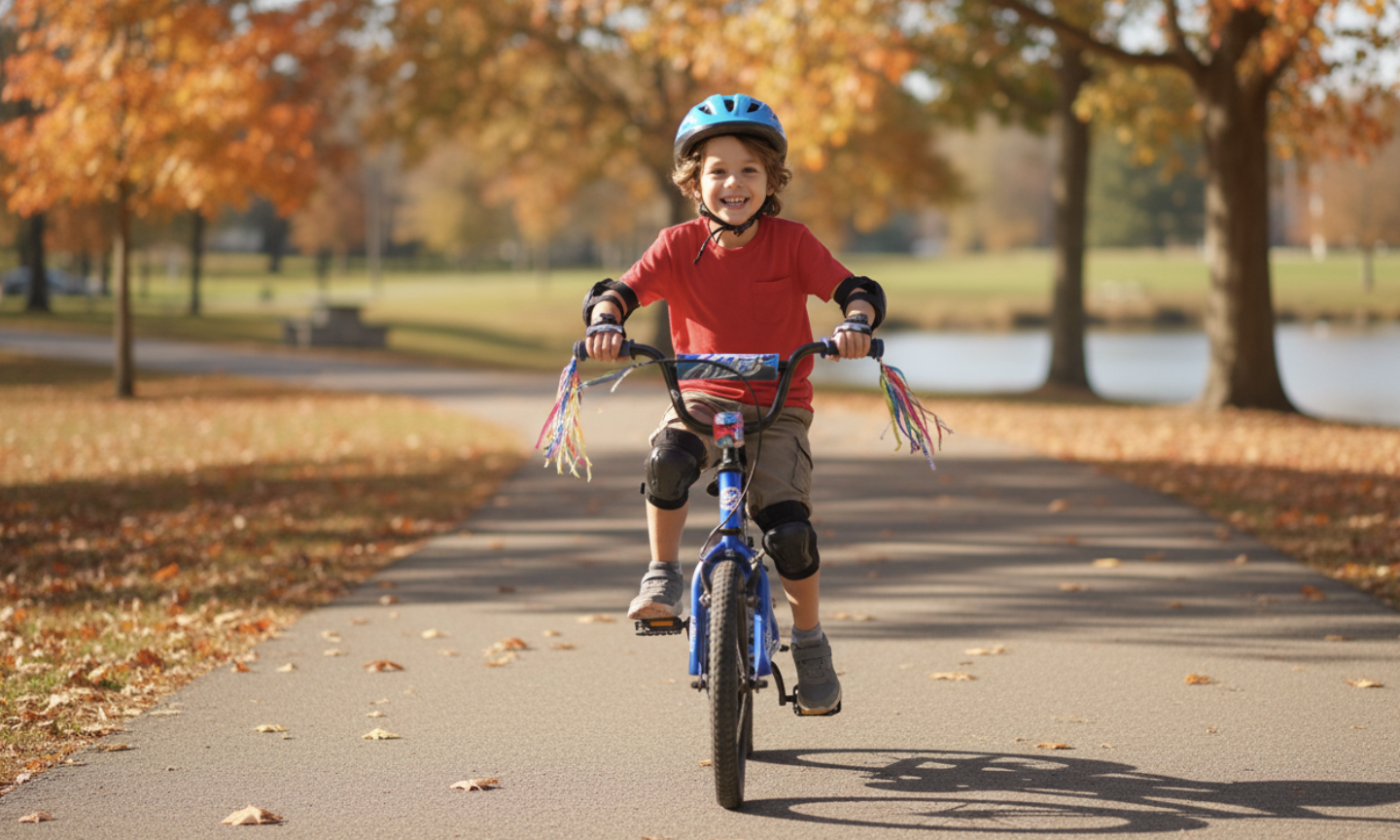
7 year old child riding a bike outside

Coral Care content is reviewed and approved by our clinical professionals so you you know you're getting verified advice.

Find effective support for developmental delays, quickly.

Self-pay or insurance
In-person and at-home appointments
No waitlist
Find Care

Concerned about your child's development?

Our free screener offers guidance and connects you with the right providers to support your child's journey.

Take the Screener

Jen Wirt, Founder of Coral Care, has been open about getting her daughter help learning to ride a bike. Her daughter's occupational therapist taught her — in their backyard, on their street, and in a nearby parking lot. "I tried the way most parents do," Jen says. "I held the seat, I ran alongside her, I let go. It didn't work. My daughter needed a different approach — she had a harder time with it than most kids. I'm not ashamed that I couldn't do it myself. Her OT could."

That experience is more common than most parents realize. And for many families, having a therapist involved in learning to ride a bike is not a last resort. It is simply the right approach.

This guide covers what occupational therapists and physical therapists know about bike riding that most parents don't — including when to ask for help, how to choose the right bike, and why the progression matters more than the timeline.

Why Bike Riding Is Harder Than It Looks

Riding a bike is one of the most neurologically complex motor tasks a child learns. It requires multiple systems to work simultaneously: balance, bilateral coordination, motor planning, core stability, visual tracking, and spatial awareness. The brain has to manage all of it in real time, on a moving object, while also processing fear and frustration.

For children who have sensory processing differences, low muscle tone, motor delays, or difficulty with proprioception, that coordination challenge can be significant. "Just keep practicing" doesn't address the underlying gaps. It just repeats the same failure loop.

Between 2014 and 2018, one million fewer kids ages 6 to 17 rode their bikes regularly. As of 2022, only about 49% of youth ages 3 to 17 had ridden a bike even once in the past year, with ridership continuing to fall since 2016. Research shows that 10 to 20% of middle schoolers cannot ride a bike at all.

For kids who struggle, that gap widens fast. And the longer they go without the skill, the more socially significant it becomes.

What Occupational Therapists Know About Bike Riding

Occupational therapists approach bike riding as a functional skill — something that builds independence, participation, and confidence. They assess what is preventing a child from learning and target those specific gaps rather than repeating the whole task from the beginning.

The grass start

One of the most effective OT techniques is also the simplest. Start on grass. Grass slows the bike down and softens falls. It adds just enough resistance that a child can focus on balance without the fear of speed or hard pavement. Jen's daughter's OT used this approach. It changed the entire dynamic.

Starting on grass provides added resistance that helps activate the proprioceptive system, allowing kids to build a connection between how their lower body feels and the movement they're performing.

Remove the pedals first

Before a child worries about pedaling, they need to understand balance. Removing the pedals turns any standard bike into a balance bike. The child scoots and glides, learning to feel the two-wheel experience without the added cognitive load of pedaling. Balance bikes encourage the disassociation of two legs in a pedaling motion and are helpful for teaching bike riding from age two and older.

Address the sensory piece

For children who process sensory input differently, the vestibular experience of riding a bike — leaning, turning, shifting weight on a moving object — can feel genuinely threatening. An OT can help a child build tolerance for that input gradually, so it stops triggering a stress response before learning can happen.

Break motor planning into steps

There are many components required for bike riding, including motor planning, body awareness, trunk control, balance, self-confidence, following directions, safety awareness, timing, and sequencing. OTs break this sequence into component parts and practice each one before combining them. They are also trained to praise small wins — buckling a helmet independently, putting down the kickstand — because confidence builds skill.

Build frustration tolerance deliberately

Learning to ride a bike involves falling. For children who struggle with frustration tolerance, that experience can shut everything down before progress happens. OTs understand how to support a child through that window — holding the space without rescuing them from the discomfort, which is where the real learning happens.

A clinical study of 53 children who participated in a therapeutic bike riding program found that 89% learned to ride independently, with the majority learning within four hours. The intervention was structured, sequential, and therapist-led. The results reflect what happens when the right support is applied.

What Physical Therapists Bring to Bike Riding

While OTs focus on the functional and sensory side, physical therapists focus on the mechanical: strength, range of motion, coordination, and postural control.

For bike riding specifically, a PT may address:

Core strength and stability. A child who cannot hold their trunk upright cannot balance on a moving bike. Regular use of balance bikes helps improve core strength, stability, and spatial awareness. PTs often address core stability as a prerequisite, not an afterthought.

Low muscle tone. Children with hypotonia may find pedaling more effortful than expected. A PT can identify whether muscle tone is contributing to the difficulty and address it directly.

Bilateral coordination. Riding a bike requires the left and right sides of the body to work in coordination — legs pedaling while arms steer. For children with asymmetry or coordination challenges, this is a specific area of intervention.

Proprioception and body awareness. Proprioception is the sense of where your body is in space. Children with proprioceptive differences often struggle with the spatial demands of bike riding — knowing how far to lean, when to turn, how to stay upright. PTs can work on this systematically.

Balance and postural control. Children with hypermobility, vestibular differences, or motor delays may have underlying postural challenges that make two-wheel balance harder than it appears. A PT can assess and treat this directly.

OT and PT often overlap in bike riding work. For children with more complex needs, both perspectives together can be the most effective approach.

The In-Home Advantage

This is where Coral Care's model matters in ways that go beyond convenience.

Jen's daughter learned to ride in their backyard, on their street, and in a nearby parking lot. Not in a clinic. Not in a gym. In the actual environment where she would eventually ride on her own.

This matters clinically. Motor skills transfer best when they are learned in the environment where they will be used. A child who learns to balance in a sterile clinical hallway still has to transfer that skill to a real driveway, a real sidewalk, with real terrain variation and real distractions. That transfer takes extra time and often extra repetition.

When therapy happens at home and in the neighborhood, there is no transfer gap. The skill is built exactly where it will be practiced. The parents are present and learn the cueing strategies alongside the child. The environment itself becomes part of the intervention.

One OT described working with children on bikes outdoors: "It doesn't really matter the condition of the lawn or yard. Kids can ride in small spaces. We can get them out on a deck or even do it in an apartment. The kids have so much fun, and their caregivers are very proud."

That is what in-home therapy looks like when it is working.

Some Kids and Parents Need Extra Help. That's Not a Failure.

There is a version of this story that a lot of parents carry quietly. You tried to teach your child to ride a bike. It didn't go well. Maybe there were tears — yours or theirs or both. Maybe you blamed the bike, or the weather, or the fact that you never had patience for this kind of thing.

Jen has talked openly about this. She tried the standard approach and it didn't work. Her daughter needed a different approach and had a harder time with it than most kids. Getting her OT involved was not a concession. It was the right call.

For children with ADHD, autism, sensory processing differences, dyspraxia, low muscle tone, anxiety, or any condition that affects motor learning or frustration tolerance, bike riding is not always a skill that unfolds naturally with practice and encouragement. Sometimes it needs professional support, a structured progression, and a clinician who understands how to meet a child where they are.

If you have been trying and not making progress, that is useful information. It is not a reflection of your parenting or your child's potential. It is a signal that a different approach is needed.

How to Choose the Right Bike

Bike fit is underrated as a factor in learning to ride. A bike that is too large or too heavy creates additional barriers that have nothing to do with the child's ability.

It is important to buy a bike that fits well now rather than one that is too large to "grow into." When a bike fits right, it is easier for kids to handle, safer, and more enjoyable to ride.

Kids' bike sizes are best determined by wheel size, which directly correlates to frame size. Age can provide a rough estimate, but height is a more accurate guide. Here is a general reference:

  • 12-inch wheels: Under 4 years old, roughly under 38 inches tall
  • 16-inch wheels: Ages 3 to 7, roughly 38 to 48 inches tall
  • 20-inch wheels: Ages 7 to 13, roughly 48 to 60 inches tall
  • 24-inch wheels: Ages 10 and up, roughly 56 to 66 inches tall

The most accurate way to size a bike is by measuring your child's inseam rather than relying on age or height alone.

When your child sits on the seat, for beginners their feet should be flat on the ground. For riders who already have balance confidence, only the toes need to touch.

A few additional things to check: knees should not hit the handlebars at full pedal extension, the child should be able to easily straddle the top tube with feet flat, and the bike should be light enough for the child to lift and maneuver independently.

For children with motor or sensory differences, also consider hand brakes versus coaster brakes (hand brakes require more coordination), tire width (wider tires offer more stability), and overall bike weight (heavier bikes are harder to control for kids with lower muscle tone).

When to Ask for Help

If your child is past the typical learning window, has been trying without progress, or is showing significant distress around the activity, it is worth talking to a pediatric OT or PT. This is especially true for children with:

  • Sensory processing differences
  • ADHD or difficulty with sustained attention
  • Low muscle tone or hypermobility
  • Autism spectrum disorder
  • Dyspraxia or developmental coordination disorder
  • Significant anxiety around motor challenges
  • Any diagnosis that affects balance, coordination, or motor learning

Bike riding is within scope for both OT and PT. It is not a peripheral skill — it is functional, it is social, and it builds real developmental assets: balance, coordination, core strength, motor planning, and frustration tolerance. You do not need to wait until everything else is addressed. Bike riding can be the intervention.

Frequently Asked Questions

At what age should a child learn to ride a bike?

Most children learn to ride a two-wheel bike between ages 4 and 6, but the range is wide. Some children are ready earlier, others learn later, and children who need extra support may follow a different timeline entirely. Age matters less than readiness — which includes balance, core strength, and the ability to tolerate the frustration of learning something new.

What skills does a child need before learning to ride a bike?

Before moving to a pedal bike, a child benefits from strong core stability, basic balance on two feet, bilateral coordination, and some tolerance for vestibular input — the sensation of movement and shifting weight. If any of these areas are underdeveloped, addressing them first will make bike riding significantly easier.

Can an occupational therapist help my child learn to ride a bike?

Yes. Bike riding is a functional skill and falls within the scope of pediatric occupational therapy. OTs can assess what is preventing a child from learning — whether sensory processing, motor planning, core strength, or frustration tolerance — and build a targeted intervention. Many OTs work on bike riding specifically with children who have not responded to standard approaches.

Can a physical therapist help my child learn to ride a bike?

Yes. PTs focus on the physical mechanics — core strength, muscle tone, bilateral coordination, balance, and postural control. For children who have physical barriers to bike riding, a PT evaluation can identify and treat the underlying causes directly.

How do I choose the right size bike for my child?

Size by wheel diameter matched to your child's height and inseam, not their age. The most important fit check: when your child sits on the seat, their feet should be flat on the ground if they are a beginner, or toes touching if they already have balance confidence. Do not size up to grow into — a bike that is too large slows learning and hurts confidence.

Should I use training wheels?

Most OTs and PTs recommend skipping training wheels in favor of the balance bike method — removing pedals and letting the child scoot and glide first. Training wheels can create a false sense of balance that makes the transition to two wheels harder. Starting with balance and adding pedals later is typically faster and more effective.

Why is my child struggling to learn to ride a bike when other kids seem to pick it up easily?

Bike riding requires a complex combination of sensory, motor, and cognitive skills working simultaneously. Children who have differences in any of those areas may find the task significantly harder. That difficulty is informative, not a ceiling. It points toward what needs support.

Is in-home therapy better for learning to ride a bike?

There is a real clinical advantage to learning in the environment where the skill will actually be used. Motor skills transfer most effectively when practiced in context. When therapy happens in the backyard, on the street, and in the neighborhood, the skill is built exactly where it needs to work — with no transfer gap.

If your child is working with a Coral Care therapist, ask about bike riding. It is within scope, and more of our OTs and PTs have done exactly this work than you might expect. If you are not yet connected with a therapist and want support, find a Coral Care therapist near you.

Frequently Asked Questions

No items found.

Related Blogs