How It Works


Our Therapies


Resources
Developmental delays can show up in movement, communication, social skills, or learning. Early intervention — starting right now, in your home — helps your child catch up and build the foundation for future learning. And it's not about diagnosis; it's about help when your child needs it.
Understanding Developmental Delays
Developmental delays occur when a child isn't meeting the milestones typical for their age in one or more areas: gross motor (running, climbing), fine motor (grasping, writing), language (understanding and using words), social-emotional (interacting with others), or cognitive (learning and problem-solving). Sometimes a child is behind in one area; sometimes it's across the board.
Here's what families often notice:
Still not sitting up by 9 months, not crawling by 12 months, not walking by 18 months. Clumsiness, poor balance, difficulty with stairs, weak core, difficulty with fine motor skills like grasping or drawing.
Limited words for age, not understanding simple instructions, difficulty with sounds, stuttering, or not engaging in back-and-forth communication. Communication seems younger than their age.
Not interested in peers, not engaging in pretend play, difficulty with turn-taking, avoiding eye contact, or not responding to their name. Play seems younger or repetitive rather than imaginative.
Difficulty with problem-solving, memory, or learning new tasks. Shorter attention span than peers. Needing extra time to process information. Struggling with everyday routines or transitions.
Early Help Makes All the Difference
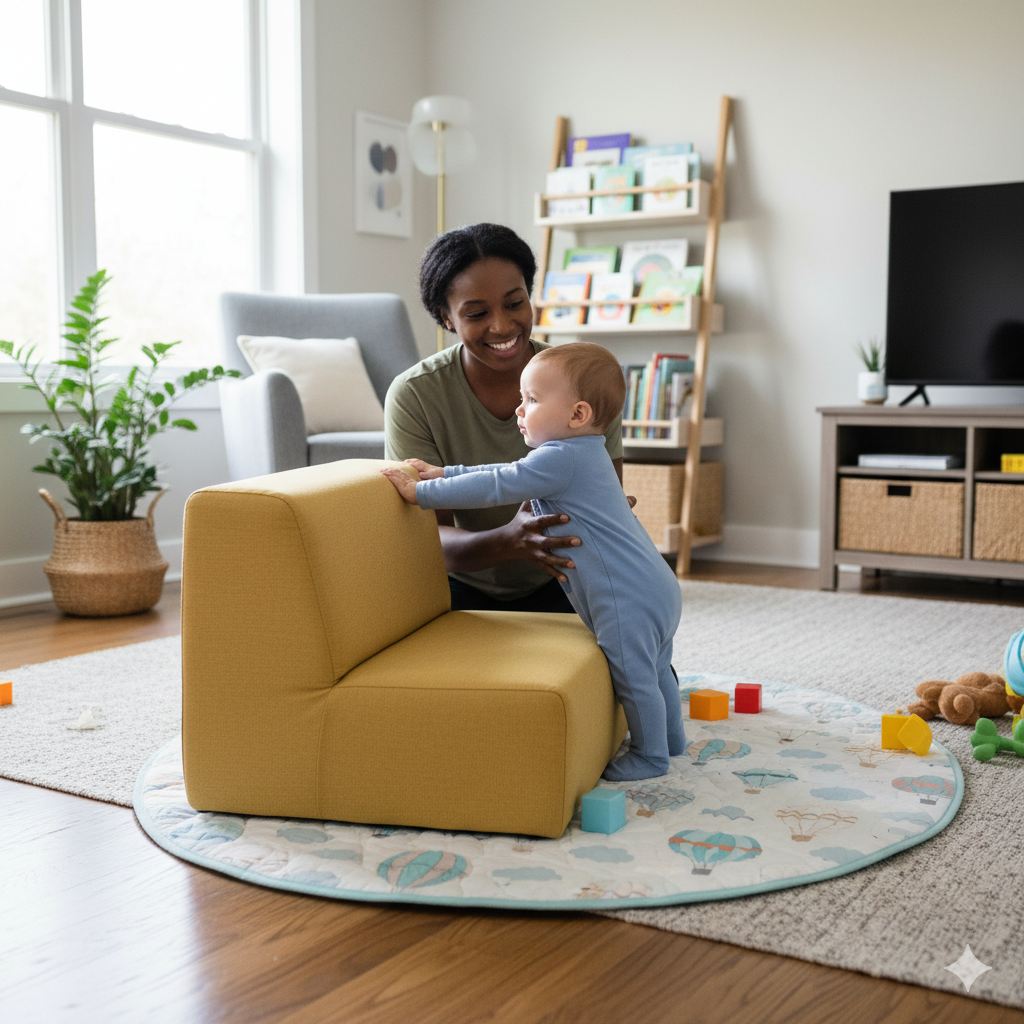
The 0-5 years are the most critical period for brain development. Early intervention during this window — when the brain is most plastic and responsive — produces the biggest gains. A child who is 6 months behind at age 2 can catch up dramatically with the right support. Waiting means missing this critical window.
Here's the truth: you don't need a diagnosis to get help. Early Intervention services in most states are available to any child suspected of delay. You don't need to wait for formal testing or a label. If you're concerned, your child can be evaluated and started on therapy immediately.
Many developmental delays resolve completely with early intervention. Some children catch up fully and no longer need services. Others make remarkable progress that changes their trajectory. But it only works if you start now, during the critical period when children's brains are most responsive to therapy.
Worried about your child's development? Get an evaluation now.
Find a Developmental TherapistBy Age
Delays look different depending on your child's age. Here's what families commonly see — and why early intervention matters at each stage.
Not reaching milestones on typical timeline — sitting, crawling, walking, climbing. Seems clumsy, weak, or uninterested in movement. Takes longer to learn new motor skills. Doesn't play actively like other toddlers.
Few words for age, not understanding simple requests, difficulty with sounds, not pointing or showing things to get attention. Seems to have trouble expressing needs or understanding what's happening.
Not engaging in pretend play, only playing with objects in basic ways, not interested in other children, not responding to simple social games like peek-a-boo or peek games.
Takes longer to learn familiar routines, doesn't anticipate what comes next in daily activities, forgets newly learned skills, needs more repetition than peers.
Difficulty with letter recognition, counting, pre-reading skills. Processing information slower than peers. Needs extra support to learn new academic concepts. May have been referred for evaluation.
Handwriting is illegible or immature for age. Difficulty with scissors, buttons, or other fine motor tasks. Gross motor skills lag — trouble with playground skills, sports, or PE.
Speech may still be somewhat unclear. Difficulty with complex conversations or following multi-step instructions. Social interactions seem immature — difficulty with friendships or group play.
Trouble focusing in class, easily distracted, difficulty following classroom routines, seems immature compared to peers, needs more redirection than classmates.
Without early intervention support, gaps that could have closed now widen. Reading, math, and executive function challenges intensify. May qualify for IEP or specialized support at this stage.
Coordination issues may limit sports, PE, or physical activities peers enjoy. Fine motor challenges may affect handwriting and academic tasks. Body image and confidence affected.
Teens with delays become acutely aware they're different from peers. Social difficulties, anxiety, or withdrawal. Self-esteem impacted by ongoing developmental gaps.
Executive function delays make it hard to manage homework, organize time, plan ahead. Difficulty with transitions, change, and self-advocacy. Independence developing slower than peers.
Concerned about your child's development? Let's get answers.
Get StartedHow We Help
Multi-disciplinary assessment identifies exactly where your child needs support — then specialized therapy targets those areas.
For developmental delays, a comprehensive evaluation is the foundation. Our team assesses your child across all developmental domains — motor skills, speech and language, cognition, and social-emotional development. This tells us exactly where your child is and where they need support. Then we provide targeted therapy in the areas of greatest need, often with a combination of disciplines working together. In-home therapy means your child receives support in familiar routines and contexts where real learning happens.
For children whose developmental delays include communication, language understanding, or speech clarity.
For children whose developmental delays involve gross motor skills, strength, balance, or coordination.
Most developmental delays benefit from multi-disciplinary support. We work together for your child.
Find the Right FitOur Philosophy
We meet your child where they are, not where we think they should be. We look for their strengths and build from there. Therapy happens in meaningful contexts — routines, play, family activities — not in artificial exercises. We coach families because the hours between therapy sessions matter most.
Developmental therapy is about building skills one step at a time. We track progress carefully and celebrate growth, even when it's smaller than we'd hope. Every step forward matters.
Kids don't learn from drills. They learn from play, exploration, and natural activities. We embed therapy into the things your child enjoys so learning happens through play.
We teach you strategies and make you the expert on your child. Our job is to get your child to the point they don't need us anymore — not to create ongoing dependency.
Therapy at home is just part of the picture. We communicate with school, pediatrician, and other providers to ensure everyone is supporting your child in the same direction.
In-home therapy means learning in the contexts where your child actually lives.
Get Matched with a ProviderYour home is where real development happens.
Getting dressed, meals, playtime, bedtime — these are where your child needs skills. We work on development in the actual contexts where your child lives, not in a clinic room.
No car rides to appointments that dysregulate your child. No waiting in clinics. Your child is relaxed and ready to learn in their familiar home environment.
Siblings, pets, favorite toys, family routines — these all become tools for learning. Your child develops skills with the people they interact with most.
Watch your child's therapist work. Learn strategies you can use every single day. Small adjustments throughout the day matter more than one weekly session.
In-home therapy means more practice, faster progress.
Get StartedReal Progress
Here's what families experience when delays are addressed early with intensive support.
From Our Families
"We were terrified something was seriously wrong. The in-home evaluation was so thorough, and within weeks of starting therapy, we saw changes. Now he's on track and we're not worried anymore. Early intervention really does work."
"Our daughter was behind in everything — walking, talking, playing. Within 6 months of OT and speech therapy at home, she caught up. She's in preschool now and doing great. We're so grateful we didn't wait."
Common Questions
No. Early intervention services are designed for any child suspected of developmental delay — you don't need a formal diagnosis. If your child is showing developmental delays, they can be evaluated and services can start immediately. The evaluation itself establishes the need.
The difference between a late bloomer and a true delay becomes clear through evaluation. The critical period for brain development is 0-5 years. If there is a delay, waiting costs crucial time. A comprehensive evaluation gives you clear answers and peace of mind.
Many developmental delays close completely with early intervention — especially in the toddler years when the brain is highly responsive. Some children always need more support in certain areas, but early intervention gives them the best chance of catching up or reaching their fullest potential. Progress is very individualized.
Not necessarily. Our evaluation tells you exactly where your child is and what they need. Some families want a formal diagnosis for school accommodations; others don't. We can do evaluation and therapy without formal diagnosis if that's your preference.
It's never too late to help, though outcomes are typically best with earlier intervention. If delays are noticed at any age, therapy can help your child catch up in specific areas and build coping strategies. School-age children often qualify for IEP services; we can work alongside school support.
Frequency depends on the severity of delays and your child's responsiveness. Early intervention is typically intensive — multiple times per week makes a bigger difference. As your child progresses, frequency may decrease. We'll recommend a schedule based on your child's specific needs.
Comprehensive developmental evaluation and in-home early intervention therapy. Catch delays early, before they widen. Give your child the foundation for future learning.
Free to get started · Insurance verified before first visit · No diagnosis needed
