




Coral Care content is reviewed and approved by our clinical professionals so you you know you're getting verified advice.
Find effective support for developmental delays, quickly.

Concerned about your child's development?
Our free screener offers guidance and connects you with the right providers to support your child's journey.
What to Expect When You Walk Through the Door
You've made the appointment. Maybe you're feeling nervous, maybe you're feeling relieved, or maybe a bit of both. Either way, knowing what to expect can make the whole experience less stressful for you and your child.
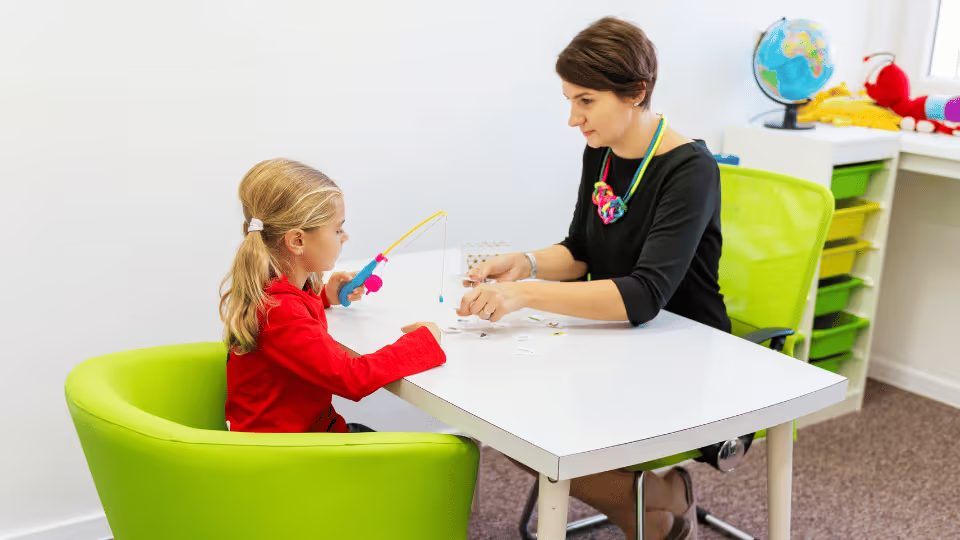
A pediatric physical therapy evaluation is not a test your child can pass or fail. It's a comprehensive look at how your child moves, what their strengths are, and whether there are areas where targeted support could help. For babies and young children, the whole thing looks a lot like play. Here's how it typically unfolds.
Before the Evaluation
Most PT practices will ask you to fill out paperwork before your visit. This usually includes your child's medical history, birth history (especially relevant for babies), a list of your concerns, information about your child's daily routines and activities, and any reports from other providers (pediatrician, neurologist, early intervention).
The more detail you can provide here, the better. PTs use this background information to guide their assessment. If your child was premature, had a NICU stay, has a known diagnosis, or is receiving other therapies, all of that context matters.
A few practical tips for the day of the evaluation: dress your child in comfortable, easy-to-move-in clothes. Bring a favorite toy or two (the PT may use them during the assessment). Try to schedule the appointment during a time when your child is usually alert and in a good mood. And bring a snack, because a hungry or tired child won't show you their best.
The Interview: Your Perspective Matters
The evaluation usually starts with a conversation. The PT will ask you questions about what you're seeing at home, what prompted you to make the appointment, and what your goals are. This isn't just a formality. Parents see things that a PT can't observe in a single session, and your input shapes the entire evaluation.
Common questions include: What specific movements or skills concern you? When did you first notice something seemed different? What does a typical day look like for your child (how much floor time, what positions do they prefer)? What motor skills can your child do consistently? Are there activities your child avoids or seems frustrated by? Has anyone else (pediatrician, daycare provider, family member) expressed concerns?
Be as honest and specific as you can. There are no wrong answers, and no concern is too small to mention.
The Hands-On Assessment
This is the core of the evaluation, and for young children, it looks like structured play. The PT will set up the environment with toys and activities designed to elicit specific movements, then observe how your child responds. Here's what they're assessing:
Muscle tone. The PT will gently handle your child's limbs and trunk to feel for muscle tone, which is the amount of tension or resistance in the muscles at rest. Low tone (hypotonia) feels floppy, while high tone (hypertonia) feels stiff. Tone affects everything from posture to movement quality.
Strength. Rather than asking your child to do exercises, the PT observes strength through functional movements. How well does your baby push up during tummy time? How long can your toddler stand on one leg? Can your preschooler jump and land with control? These everyday movements reveal a lot about underlying strength.
Range of motion. The PT will gently move your child's joints through their full range to check for tightness or restrictions. This is especially important for babies with suspected torticollis (neck tightness) or children with gait abnormalities.
Balance and coordination. For babies, this means observing protective reactions (do they catch themselves when they start to fall?) and righting reactions (can they regain their balance after being gently tipped?). For older children, it might include standing on one foot, walking on a line, or catching a ball.
Movement quality. This is where a PT's trained eye really comes into play. They're not just looking at whether your child can roll, sit, or walk, but how they do it. Are they using compensatory patterns? Is one side working harder than the other? Are they using momentum instead of muscle control? The quality of movement often tells a more important story than the milestone checklist.
Functional skills. The PT will assess your child's ability to perform age-appropriate activities: getting in and out of positions, navigating obstacles, climbing, and interacting with their environment. These functional observations connect the clinical findings to real-world impact.
Standardized Testing
Many PTs will also use a standardized assessment tool during the evaluation. Common ones include the Peabody Developmental Motor Scales (PDMS-2), the Bayley Scales of Infant Development, the Gross Motor Function Measure (GMFM), and the Alberta Infant Motor Scale (AIMS). These tools provide objective scores that help quantify your child's motor skills compared to age-matched peers. They're also useful for tracking progress over time.
Standardized tests are just one piece of the puzzle. A PT will always interpret test scores alongside their clinical observations and your parent report to get the full picture.
How Long Does the Evaluation Take?
A comprehensive initial evaluation typically takes 45 to 60 minutes. Some evaluations run a bit longer if the child needs warm-up time or if there are complex findings to discuss. The PT will pace the session based on your child's energy level and attention span, and breaks are normal and expected.
What Happens After the Assessment
At the end of the evaluation, the PT will share their findings with you. This conversation usually covers what they observed during the assessment, how your child's skills compare to typical developmental expectations, whether they recommend therapy, and if so what a treatment plan would look like, and specific activities you can start doing at home right away.
A good PT will explain everything in plain language, not clinical jargon. They'll answer your questions, address your concerns, and make sure you leave with a clear understanding of where your child stands and what the next steps are.
If therapy is recommended, the plan will typically outline how often sessions should happen (usually once or twice a week), what goals therapy will target, an estimated timeline for how long therapy might last, and a home exercise program you can integrate into daily routines.
What If the Evaluation Shows Everything Is Fine?
This happens more often than you might think, and it's a great outcome. You came in with a concern, you got it checked by a professional, and you learned that your child is developing within normal limits. The PT will likely give you tips for supporting your child's development at home and may suggest a follow-up appointment in a few months to recheck if anything was borderline.
Getting an evaluation that comes back "normal" is never a waste of time. You gained peace of mind and valuable information about your child's development.
Getting Started with Coral Care
At Coral Care, we make the evaluation process as smooth as possible. We handle insurance verification, match your family with a PT who specializes in your child's specific needs, and offer both in-home and clinic-based options depending on your preference.
If you're ready to take that first step, get matched with a pediatric PT who can evaluate your child and give you the clarity you're looking for.
Frequently Asked Questions
Dress your child in comfortable, easy-to-move-in clothes, bring a favorite toy or two since the PT may use them, schedule for a time when your child is usually alert and in a good mood, and bring a snack since a hungry or tired child won't show their best. Providing detailed history beforehand (birth history, any diagnoses, other therapies) also helps the PT guide the assessment.
An evaluation is not a test your child can pass or fail; it's a comprehensive look at how your child moves, their strengths, and where targeted support could help. For babies and young children, it looks a lot like play. It usually starts with paperwork and a conversation about your concerns, then hands-on observation of your child's movement, strength, range of motion, and balance.

.avif)