
Coral Care content is reviewed and approved by our clinical professionals so you you know you're getting verified advice.
Find effective support for developmental delays, quickly.

Concerned about your child's development?
Our free screener offers guidance and connects you with the right providers to support your child's journey.
Play is not just fun for kids. It is the foundation of their development.
Parents often ask us, “What toys do pediatric therapists actually use in sessions?”
And the answer is almost always the same.
Not the toys that light up.
Not the toys that talk.
Not the toys that entertain.
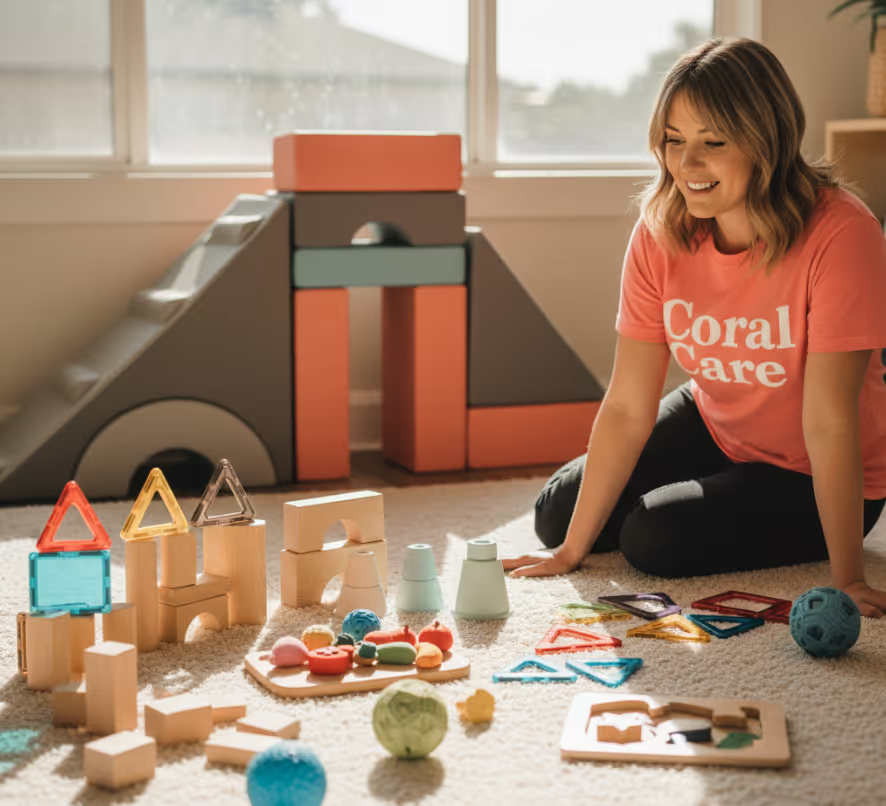
The toys we use most are the ones that help kids move, communicate, imagine, problem solve, regulate, and explore. They are simple, open-ended, and endlessly flexible.
At Coral Care, our pediatric speech, occupational, and physical therapists spend thousands of hours each year on living room floors with children. These are the toys they reach for again and again, and the toys they recommend to parents to support progress at home.
Below is our therapist-approved toy list broken down by developmental domain. You will also find links to our Pediatric Developmental Gift Guide and Milestone Guides for deeper support.
1. Toys That Build Fine Motor Skills (OT Favorites)
Fine motor skills lay the foundation for handwriting, feeding, dressing, and early independence.
Recommended toys:
- Stacking cups
- Squigz and suction toys
- Jumbo crayons and triangular crayons
- Play dough and tools
- Tongs and pom-poms
- Wooden peg puzzles
- Bead threading sets
Why these toys help:
They build hand strength, grip patterns, bilateral coordination, finger isolation, and early motor planning.
Gifts to Support Fine Motor Milestones
2. Toys That Support Speech and Language (SLP Essentials)
Children learn language through connection, imitation, and pretend play.
Recommended toys:
- Toy food and kitchen sets
- Farm animals or dollhouse figures
- Cars and simple push toys
- Bubble machines for cause and effect
- Board books and picture books
- Mr. Potato Head
- Simple puppets
Why these toys help:
They support labeling, requesting, early pretend play, turn taking, sequencing, and expressive language.
Gifts to Support Language and Communication Development
3. Toys That Build Gross Motor Skills (PT Favorites)
Movement is the foundation of balance, core strength, coordination, and self-regulation.
Recommended toys:
- Foam climbing blocks
- Balance beams
- Ride-on toys
- Play tunnels
- Obstacle course sets
- Bean bags and stepping stones
- Lightweight balls
Why these toys help:
They build core stability, bilateral coordination, endurance, motor planning, and confidence in movement.
Toys to Develop Gross Motor Skills
4. Toys That Support Sensory Regulation (OT and PT Picks)
Sensory development helps children process the world calmly and confidently.
Recommended toys:
- Kinetic sand
- Water beads with supervision
- Sensory bins
- Liquid timers
- Sensory balls
- Fidget toys
- Textured play mats
Why these toys help:
They support tactile processing, calming strategies, attention, and body awareness.
5. Toys That Build Imagination and Cognitive Skills
These toys grow with the child, from simple stacking to complex storytelling.
Recommended toys:
- Magnetic tiles
- Wooden blocks
- Pretend play sets
- Art supplies
- Figurines and dollhouses
- Train sets
- Play scarves
Why these toys help:
They support flexible thinking, sequencing, early problem solving, social skills, and emotional expression.
Toys to Promote Creativity & Imagination
What All Therapist-Recommended Toys Have in Common
They are simple but powerful.
They invite creativity.
They encourage movement, connection, and imagination.
They help children work on core developmental skills in natural, joyful ways.
If you want toys that truly help your child grow, these are the ones to start with.
Explore the Full Coral Care Pediatric Developmental Gift Guide
Our team curated the 2025 Pediatric Developmental Gift Guide with toys for children from birth to age eight, organized by age and by developmental focus area.
Explore the full guide
Explore developmental milestones by age
Because the best toys do not entertain children. They help them grow.
Frequently Asked Questions
What makes a toy “therapist-recommended”?
The toys our therapists reach for again and again share a few key traits: they’re open-ended (usable in many different ways), hands-on, sensory-rich, and directly tied to developmental milestones. Unlike toys that entertain passively — lighting up, making sounds, or doing the work for the child — developmental toys require the child to move, problem-solve, communicate, and imagine. That active engagement is where real skill-building happens.
What toys do occupational therapists recommend for fine motor development?
Our OTs most often recommend stacking cups, peg puzzles, play dough and tools, tongs with pom-poms, bead threading sets, and Squigz. These build the hand strength, grip patterns, bilateral coordination, and finger isolation that lay the foundation for handwriting, self-feeding, and dressing independently.
What toys do speech therapists use in sessions?
Speech-language pathologists tend to favor toys that naturally invite labeling, requesting, and pretend play: toy food and kitchen sets, farm animals, dollhouses, simple puppets, board books, and Mr. Potato Head. These toys create endless opportunities for children to practice early language — not through drilling, but through joyful, back-and-forth interaction.
Are open-ended, screen-free toys really better for development?
In general, yes — and the reason is straightforward. Toys that do the work for the child (talking toys, light-up games, screens) leave fewer opportunities for the child to engage their own problem-solving, imagination, and motor skills. Open-ended toys grow with the child and continue to challenge them in new ways. That’s why our therapists — across OT, SLP, and PT — consistently reach for the same simple, flexible toys over flashy ones.
Frequently Asked Questions
SLPs favor toys that create natural back-and-forth communication: simple puzzles that invite labeling, animal sets and figurines for pretend play and narrative language, books with repetitive text, bubbles for requesting and turn-taking, and cause-and-effect toys for early communicators. High-quality language input during play matters more than the toy itself.
OTs gravitate toward open-ended toys with high developmental value: playdough and putty for fine motor and sensory input, building sets like Duplo and Magna-Tiles for spatial reasoning and bilateral coordination, sensory bins for tactile exploration, and balance boards for core and proprioceptive input. They generally steer away from toys that do everything for the child.