
Coral Care content is reviewed and approved by our clinical professionals so you you know you're getting verified advice.
Find effective support for developmental delays, quickly.

Concerned about your child's development?
Our free screener offers guidance and connects you with the right providers to support your child's journey.
If you've spent any time on parenting forums or social media, you've probably seen the warnings: "Don't let your child W-sit!" The alarm bells range from "it'll ruin their hips" to "it causes pigeon toes" to "it means something is wrong with their development."
As with most things in parenting, the reality is more nuanced. W-sitting is not always a problem. But it's not always harmless, either. Here's what a pediatric physical therapist actually thinks about it.
What Is W-Sitting?
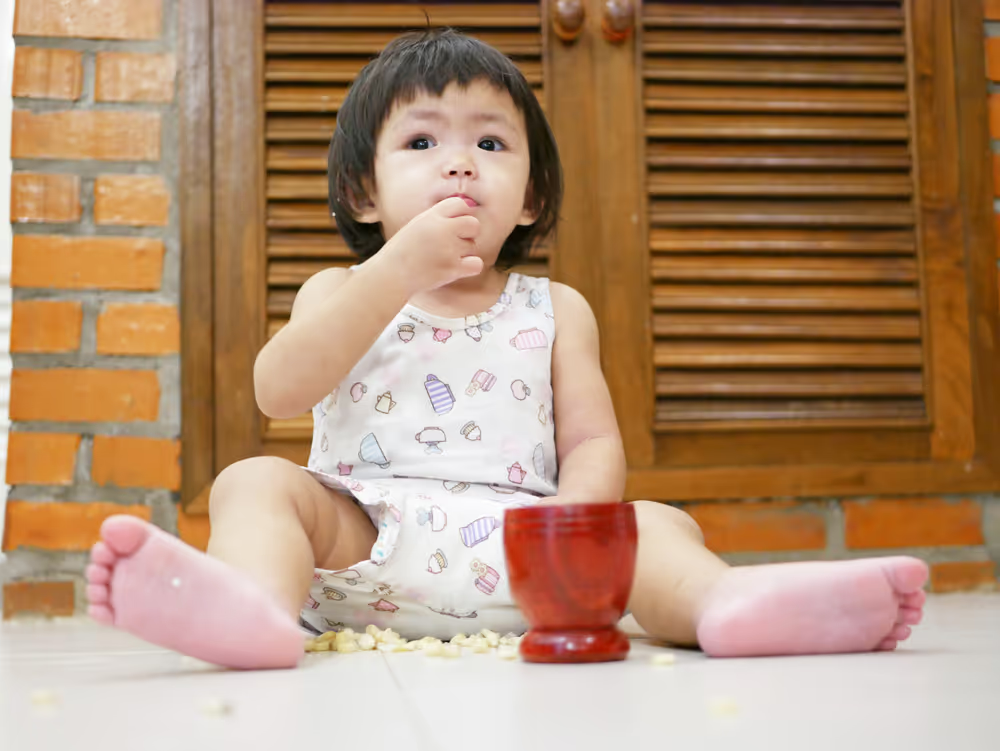
W-sitting is a sitting position where a child sits on their bottom with their knees bent and their feet splayed out to either side of their hips. When viewed from above, their legs form the shape of the letter W.
It's an incredibly common position. Almost every toddler and preschooler does it at some point. Many kids move in and out of W-sitting naturally as they play, cycling through different sitting positions throughout the day. That's normal and generally fine.
Why Kids W-Sit
Kids don't W-sit to annoy you or because they're being lazy. They do it because it's stable. W-sitting creates a wide base of support, which means the child doesn't have to work as hard to keep their balance while playing with toys or reaching for objects.
This is why you'll see W-sitting more often in kids who:
- Have low muscle tone (hypotonia). Kids with lower core strength often prefer W-sitting because it requires less trunk control than other sitting positions.
- Have joint hypermobility. Flexible kids may W-sit because their joint range allows it comfortably, and it provides the stability their loose joints don't naturally offer.
- Are focused on playing. When a child is deeply engaged with a toy or activity, they may default to W-sitting because it lets them use both hands freely without thinking about balance.
- Have motor planning challenges. Some kids who struggle with motor planning find W-sitting easier because they don't have to manage the constant postural adjustments that other positions require.
When W-Sitting Is Not a Big Deal
If your child occasionally W-sits but also sits in other positions (cross-legged, side-sitting, legs extended in front), moves in and out of the position easily, and is meeting their gross motor milestones on time, there's generally no need for concern.
Many kids go through a W-sitting phase between ages 2 and 4 and naturally grow out of it as their core strength develops and they discover other comfortable positions.
When W-Sitting Deserves Attention
W-sitting becomes more of a concern when:
It's their primary or only sitting position. If your child always defaults to W-sitting and rarely sits any other way, it may signal that they're avoiding positions that challenge their core muscles. This can create a cycle where the core stays weak because it's never being challenged.
They have difficulty transitioning out of it. A child who struggles to move out of W-sitting into other positions, or who "gets stuck" in the W, may have underlying motor challenges worth exploring.
You notice other motor concerns. If W-sitting is happening alongside delayed milestones, poor balance, frequent falling, difficulty with activities like climbing or running, or limited crossing of the midline (reaching across their body), the W-sitting may be part of a bigger picture.
There's a known diagnosis. For kids with conditions like cerebral palsy, Down syndrome, or significant hypotonia, W-sitting can put extra stress on already vulnerable hip and knee joints. In these cases, therapists are more proactive about redirecting the position.
It's accompanied by hip or knee pain. While uncommon in young children, persistent W-sitting can occasionally contribute to discomfort in the hips, knees, or lower back.
What the Research Actually Says
The internet makes W-sitting sound catastrophic. The research is more measured. There's limited evidence that occasional W-sitting in otherwise healthy children causes long-term orthopedic problems. The bigger concern from a PT perspective is what habitual W-sitting tells us about a child's core strength, motor planning, and overall movement quality.
In other words, the position itself isn't usually the problem. But it can be a signal that points to underlying issues worth addressing.
What to Do About W-Sitting
If you're concerned about your child's W-sitting, here's a practical approach:
Don't panic or constantly correct. Shouting "fix your legs!" every few minutes creates stress for both of you and doesn't address the underlying reason they're choosing that position. Instead, gently help them transition to a different position.
Offer alternatives. When you notice W-sitting, try saying something like "let's try crisscross" and physically help them move their legs. Side-sitting, cross-legged sitting, and sitting on a small stool are all great alternatives.
Build core strength through play. Activities like climbing, crawling through tunnels, wheelbarrow walking, animal walks (bear walk, crab walk), and playing on unstable surfaces (cushions, balance boards) all build the core strength that makes other sitting positions easier.
Use furniture to your advantage. Having your child sit at a child-sized table and chair for activities like coloring or puzzles naturally prevents W-sitting and encourages better posture.
Consider a PT evaluation if it's persistent. If your child is an exclusive W-sitter, especially past age 4, or if you're noticing other motor concerns alongside it, a pediatric PT can assess whether there are underlying strength or motor planning issues to address.
When to See a Pediatric PT
A PT evaluation makes sense if:
- W-sitting is your child's only or strongly preferred sitting position
- Your child is over 4 and still primarily W-sitting
- You're seeing other motor concerns (poor balance, delayed gross motor skills, difficulty with coordination)
- Your child has a known diagnosis that makes joint stress a concern
- Frequent redirecting hasn't made a difference
A pediatric PT will evaluate your child's core strength, hip range of motion, motor planning abilities, and overall gross motor skills. If W-sitting is a symptom of something deeper, they'll build a plan to address the root cause, not just the sitting position.
At Coral Care, our PTs work with kids on core strength, motor planning, and movement confidence every day. If you're concerned about your child's sitting habits or overall motor development, schedule an evaluation We'll help you figure out whether the W-sitting is just a phase or something worth working on.
Frequently Asked Questions
Don't panic or constantly correct, which just creates stress. Instead, gently help them shift to another position with a cue like "let's try crisscross," offer alternatives like side-sitting or a small stool, and build core strength through play like climbing, crawling through tunnels, animal walks, and balance activities. Using a child-sized table and chair for coloring or puzzles naturally discourages W-sitting.
It deserves a closer look when it's your child's primary or only sitting position, when they struggle to transition out of it or get stuck, when it appears alongside other motor concerns like delayed milestones or frequent falling, when there's a diagnosis that makes joint stress a concern, or when it comes with hip or knee pain. Exclusive W-sitting can signal that a child is avoiding positions that challenge their core, keeping the core weak.
Usually not on its own. W-sitting is extremely common: almost every toddler and preschooler does it because it creates a wide, stable base that takes less core strength than other positions. If your child also sits in other positions, moves in and out of the W easily, and is meeting gross motor milestones on time, there's generally no need for concern. Many kids go through a W-sitting phase between ages 2 and 4 and grow out of it.