How It Works


Our Therapies


Resources
Many families worry that bilingualism is causing speech delays. It's not. What matters is whether your child is developing language — across both languages. In-home speech therapy works in all your home languages, supporting true bilingual development.
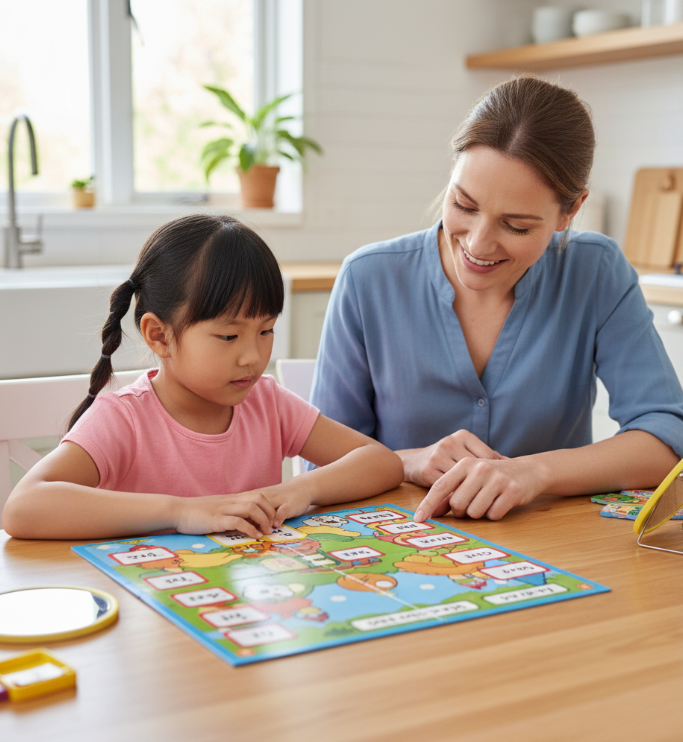
Understanding Bilingual Speech Development
This is the most important thing to understand: bilingualism does not cause language delays or speech disorders. Children who grow up with two or more languages learn both languages. Yes, they might have fewer words in each language compared to monolingual peers, but their total vocabulary across both languages is actually larger. That's not a delay — that's bilingual development.
However, some bilingual children do have true speech and language disorders that exist independently of bilingualism. Here's what families often notice:
All bilingual children mix languages — this is completely normal. But true delays involve more mixing than expected, unclear pronunciation in both languages, or vocabulary that's delayed across both languages combined.
Not just fewer words in one language compared to monolingual peers (this is normal in bilingual kids), but fewer words across both languages combined. They're not talking as much in either language.
By age 2, most bilingual children have 50+ words across both languages. If your child has significantly fewer words in both languages combined, speech support might help.
Your child is frustrated because they can't communicate their needs or ideas. They're not understood by family members who speak the same language. Behavior problems emerge from communication difficulty.

Bilingualism is a Strength, Not a Problem
Some families are told to stop speaking their home language to "help" speech development. This is wrong and harmful. Your home language is how your child connects with family, culture, and identity. Stopping it won't help speech — it will harm your child's overall development.
A good speech-language pathologist works in ALL your home languages. They don't ask you to choose. Instead, they help your child develop language skills across the languages your family actually speaks.
If your bilingual child has a true speech delay, stopping the home language won't fix it. What helps is speech therapy that's delivered in your actual languages and that works with how your child's multilingual brain develops. Never sacrifice your family's language and culture for speech therapy.
Does your bilingual child need speech support? Let's figure it out together.
Find a Bilingual SLPBy Age
Bilingual children develop language on a different timeline than monolingual children. Here's what to expect and when speech support might help.
Babbling in both languages, beginning to produce sounds from both. Sound system developing across the languages they hear. Sounds may be different in each language.
By 18-24 months, bilingual toddlers typically have 50+ words across both languages combined (not per language). First words may come in one language or the other.
Responding to familiar words in both languages. Using gestures and early words to communicate needs. Understanding more than they can say (receptive language).
Using words from both languages in the same sentence or conversation. This is typical bilingual development, not confusion. Shows the child recognizes both languages.
Vocabulary growing rapidly in both languages. May have more words in the language of school or peers, more words in the language of home — this is normal. Total vocabulary across both is what matters.
Learning different word order, verb conjugation, plurals in each language. May mix grammar patterns initially (also completely normal). Grammar in both languages becoming more accurate.
Acquiring the more formal language of classroom instruction. May still be more comfortable with home language. Building academic language skills in both languages over time.
Reading and writing developing, potentially in one or both languages. Literacy in one language often transfers skills to the other. Bilingual literacy is valuable and supported.
Able to explain, persuade, and discuss abstract concepts in both languages. Abstract thinking developing in both languages. Capable of formal and informal communication in each.
Mastering the formal language of school subjects. Understanding nuanced language. Taking notes and writing essays. Academic language developing in both languages.
Choosing which language to use based on context and audience. Using both languages strategically and fluidly. Languages representing identity and cultural connection.
Research shows bilingualism supports executive function, cognitive flexibility, and perspective-taking. Bilingual teens have advantages in thinking and communication.
Is your bilingual child developing language across both languages? Let's talk about it.
Get StartedHow We Help
Speech therapy that works with your family's actual languages — not against them.
A culturally responsive SLP understands bilingual development and works in the languages your family actually speaks. Your therapist comes to your home and supports language development in both languages, helping your child communicate with family and community. We never ask you to choose one language — we support your child's development across all the languages in their life.
For bilingual children who have speech needs combined with cognitive or motor planning differences that affect communication.
For bilingual children whose speech or language needs are combined with motor planning or coordination challenges.
Most bilingual children just need SLP support. Some benefit from added OT or PT for motor concerns.
Find the Right FitOur Philosophy
We never ask families to choose one language or stop speaking their home language. Your family's language is how your child connects to relatives, culture, and identity. A good SLP works with all the languages in your child's life and helps them develop across all of them. Bilingual children are not broken — they're developing differently, and they need support that honors that.
We don't evaluate your child's English skills alone. We look at vocabulary and skills across both languages combined. That's the real picture of bilingual development.
We don't require English-only therapy. We work in the languages your family speaks at home. That's where your child needs to communicate most, and that's where progress matters most.
Bilingual children often mix languages (completely normal) or have smaller vocabulary in each language (also normal). A real disorder affects language across both languages. We help families understand the difference.
Every family has language strengths. We build on those strengths rather than focusing on deficits. We coach families on how they're already supporting language development at home.
Speech support that honors all the languages your family speaks.
Get Matched with a ProviderYour home is where bilingual communication actually happens.
The SLP comes to your home where your family speaks both languages. Therapy happens in the real communication contexts where your child needs to use language.
Everyone in your home can learn strategies to support language development in their language. Grandparents, siblings, caregivers — all supporting language across the languages they speak.
Your family's routines, songs, stories, and cultural practices support language development. We build strategies into the activities your family already does together.
Home-based therapy doesn't require sacrificing family language. Your child develops speech in the languages that connect them to family and culture.
In-home bilingual speech therapy means language grows across all your family's languages.
Get StartedReal Progress
Here's how families see their bilingual children thrive with culturally responsive support.
From Our Families
"We were told to stop speaking Spanish at home to help with English speech development. The SLP explained that was actually harmful. She worked with both Spanish and English, and my daughter's language just flourished in both. Thank you for supporting our bilingualism instead of attacking it."
"The SLP helped us understand that bilingual kids don't have smaller vocabularies — they just distribute words across two languages. Once we understood that, we stopped worrying. She worked with both languages and our son became such a confident communicator in Spanish and English."
Common Questions
No. Bilingualism does not cause speech or language delays. Bilingual children learn two languages. They might have fewer words in each language compared to monolingual peers, but their total vocabulary across both languages is actually normal or larger. If there's a true delay, it exists independently of bilingualism and affects both languages.
Absolutely not. Stopping your home language won't help speech development — it harms your child's overall language development, cultural connection, and family relationships. If your child has a speech disorder, they need speech therapy in your actual languages, not language elimination.
Look at total vocabulary across both languages combined. By age 2, bilingual children typically have 50+ words across both languages. By age 3, 200+ words across both. If your child's combined vocabulary is significantly below these benchmarks, or if speech is hard to understand in both languages, an SLP evaluation can help clarify.
No. English-only therapy won't help your child communicate at home with family who speaks another language. Your child needs a bilingual or culturally responsive SLP who works in the languages your family actually speaks.
No. All bilingual children code-switch — this is completely normal and actually a sign of bilingual competence. They're using both languages and switching strategically. This is different from a true language disorder.
Look for an SLP who: speaks both your family's languages (or has training in bilingual assessment and therapy), doesn't recommend stopping your home language, assesses language across both languages, and works in the languages your child speaks. Avoid SLPs who treat bilingualism as a problem.
In-home speech-language therapy that works in all your family's languages. Culturally responsive support for your bilingual child's communication development.
Free to get started · Insurance verified before first visit · No diagnosis needed
