
Coral Care content is reviewed and approved by our clinical professionals so you you know you're getting verified advice.
Find effective support for developmental delays, quickly.

Concerned about your child's development?
Our free screener offers guidance and connects you with the right providers to support your child's journey.
If you spend any time in parent groups, you have seen the comment. Maybe you have made it yourself. "Ms. Rachel taught my kid to talk."
Then, almost on cue, someone replies that screens cannot teach language and that real learning only happens face to face. So which is it?
The honest answer is that both sides are partly right, and the full picture is more reassuring (and more useful) than either one. Here is what is actually happening when your toddler lights up for Ms. Rachel, and how to make that time work harder for your child's language.
What Ms. Rachel is actually doing
Ms. Rachel is not magic, but she is not random either. Watch closely and you will notice she uses many of the same techniques a speech-language pathologist uses in early intervention:
These are real, well-studied language strategies. When your child hears "uh oh" fifty times in a week, with the same gesture and the same expectant pause, that repetition does something. So when you feel like Ms. Rachel "taught" your child a word, you are noticing something true.
The part that usually gets left out
Here is what the viral comments tend to skip. Children learn language best through back-and-forth interaction with a real person who responds to them in the moment. Researchers call this contingent interaction, and it is the one thing a screen cannot do. Ms. Rachel says "can you say ball?" the exact same way every time, whether your child babbles back, points, or wanders off. A person in the room with your child adjusts to what your child just did. That responsiveness is the engine of early language.
There is one more quiet truth in those comments. A lot of the progress parents credit to Ms. Rachel lines up with two other things happening at the same time: a child who was already on the edge of a language burst, and a parent who started narrating, singing, and pausing more after watching her. In other words, Ms. Rachel may be coaching the grown-ups as much as she is entertaining the kids. That is a good thing. It just means the credit belongs to the living room, not the screen.
So is screen time the enemy now?
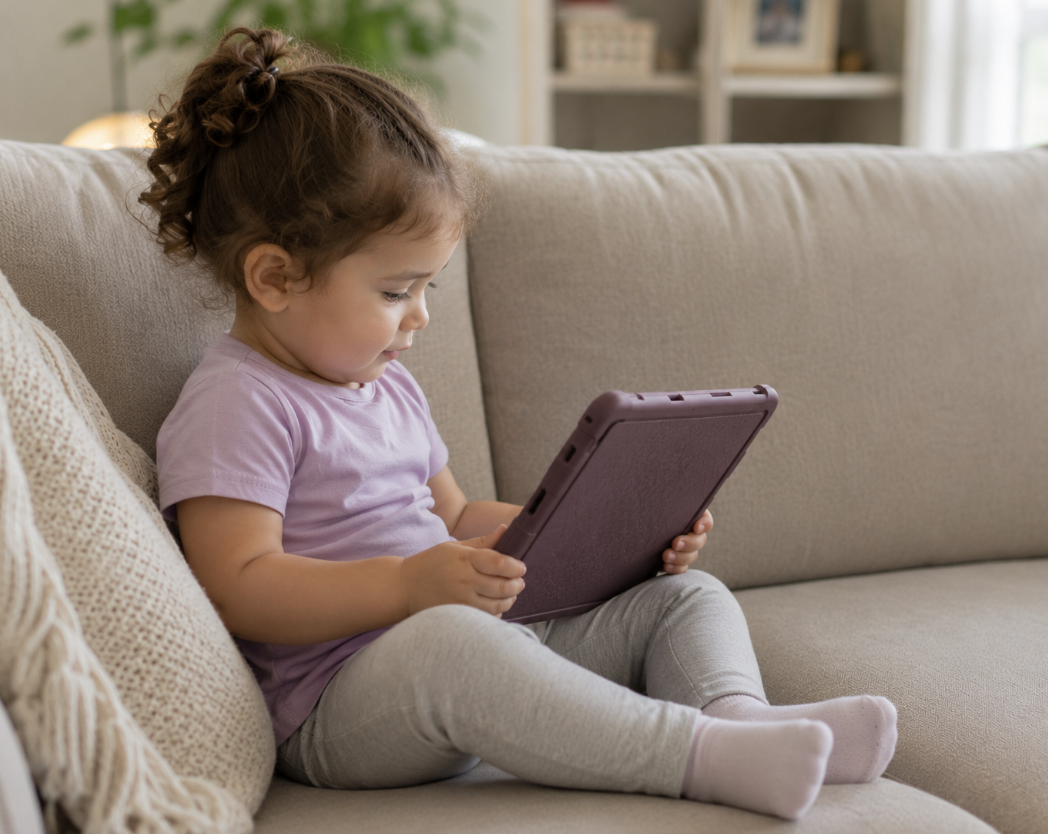
You may have seen another comment in those same threads: "What happened to no screens before 18 months?" It is a fair question. General guidance still leans toward little to no screen media for the youngest children, apart from video chatting, and toward watching together once you do introduce it.
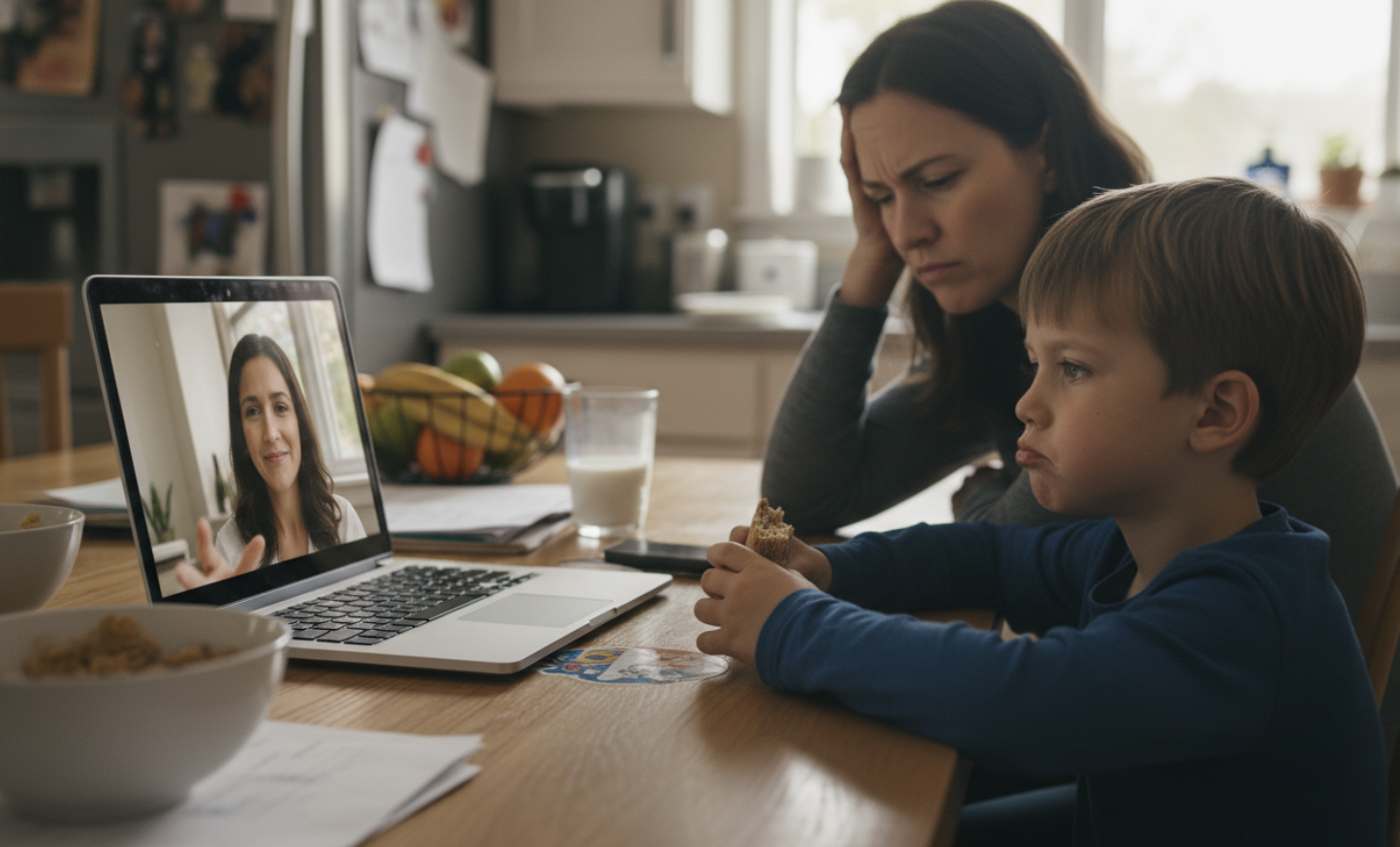
But shame is not a parenting strategy, and we are not here to hand it out. A few minutes of Ms. Rachel while you make dinner is not going to undo your child's development. The difference that matters is not screen versus no screen. It is screen alone versus screen with you. Passive watching does very little for language. Watching alongside your child, where you copy her, talk back, and turn it into a game, is a completely different activity.
How to turn Ms. Rachel into real language practice
If your child loves Ms. Rachel, you can borrow her playbook and make every episode count:
When a slow start is worth a closer look
Most of the time, a child who is a little behind on words catches up, especially with rich, responsive interaction during everyday play. But Ms. Rachel cannot tell you whether your child is simply taking their time or whether something is getting in the way. That is a question for a person, not a playlist.
It may be worth talking to your pediatrician or a speech-language pathologist if your child:
None of these mean something is wrong. They are signals that a real person should take a look. Early support is low-pressure and it works, and the sooner it starts, the easier it tends to be.
Where Coral Care fits
This is the part we care about most. The single most powerful language tool in your child's life is a responsive adult, and that can be coached. When you book with Coral Care, a licensed speech-language pathologist comes to you and works right in your living room, with your toys, your routines, and your child. They do the same thing the best parts of Ms. Rachel do, modeling and pausing and playing, except they adjust to your child in real time and they teach you how to keep it going after they leave.
If you have ever thought "Ms. Rachel taught my kid to talk," imagine what happens when the model in the room can actually respond.
Wondering whether your child could use a little support? We can help you find out. Get started with Coral Care.
Related reading
Frequently Asked Questions
Yes. A licensed speech-language pathologist comes to you and works in your everyday spaces, then teaches you how to support your child's language between visits.
An SLP figures out why your child is communicating the way they are, responds to your child in the moment, and coaches you on what to do between sessions. A video cannot assess your child or adjust to them.
Not necessarily, but it is worth a closer look. If your child is not using words by 15 to 18 months or combining words by around 24 months, ask your pediatrician or a speech-language pathologist.
General guidance favors very limited screen media for children under about 18 months, apart from video chatting, and watching together once you introduce it. Your pediatrician can help you decide what fits your family.
Passive, solo screen time does little for language and can crowd out interaction. Watching with your child and talking back makes the same screen time far more useful. The company matters more than the screen.
Because she uses real language strategies: slow speech, heavy repetition, gestures, songs, and expectant pauses. Children also tend to gain words right when they are developmentally ready, and many parents start interacting more after watching her, which adds up.
Screens can model language, but children learn to talk through back-and-forth interaction with responsive people. Shows like Ms. Rachel can support language when you watch together and turn it into a two-way activity, but they do not replace real conversation.
.avif)