

This is some text inside of a div block.

Sometimes. Reading rests on language, so trouble with word retrieval, following directions, or understanding spoken language can show up as a reading struggle. A speech-language pathologist can assess whether language is part of the picture. For some children, a specific reading difference like dyslexia is the driver, which calls for specialized instruction rather than speech therapy.

This is some text inside of a div block.

Both are valid. You can request a school evaluation in writing, and you can also pursue a private occupational or speech evaluation. You do not need a diagnosis or a pediatrician's referral to start a private evaluation.

This is some text inside of a div block.

Usually not. When school is genuinely hard for reasons no one has identified, pulling back is a way of protecting yourself from feeling like a failure. Lost motivation is often a sign that something underneath needs support, not a character flaw.

This is some text inside of a div block.

It is the set of mental skills involved in starting tasks, organizing, planning, managing time, and holding information in mind. When these are weak, even a capable child can struggle to get work done and can start to seem unmotivated.

This is some text inside of a div block.

Indirectly, yes. Occupational therapists work on the foundational skills that schoolwork depends on, such as executive functioning, attention and regulation, and fine-motor and handwriting skills. They do not teach academic content, but they can remove the barriers that make learning the content so hard.

This is some text inside of a div block.

Very commonly. Being bright is not the same as having the underlying skills that make schoolwork doable, like executive functioning, language processing, or handwriting. A capable child can struggle when one of those is lagging, and it often looks like a motivation problem.

This is some text inside of a div block.

If the struggle is in one subject and your child engages when someone works with them, tutoring may be enough. If they are struggling across subjects, working hard without progress, or losing motivation, it is worth checking for an underlying skill before adding more tutoring hours.

This is some text inside of a div block.

Coral Care's developmental guides lay out what most children are doing at each age, from 0 to 18 years. They are an easy way to see where your child is and bring specifics to your pediatrician.

This is some text inside of a div block.

No. Early support can begin based on need. You do not have to wait for a formal label, or even a referral, to ask for an evaluation.

This is some text inside of a div block.

The update was meant to move away from waiting, even though some ages moved later. If your instinct or the checklist says something is off, it is worth raising now.

This is some text inside of a div block.

Because babies vary widely in whether and when they crawl, so it was not a reliable single marker. That said, many physical therapists still consider crawling developmentally valuable, so mention it to your pediatrician if your child skips it along with other concerns.

This is some text inside of a div block.

Not necessarily. A missed milestone is a reason to ask, not to panic. The point is to look, not to label.

This is some text inside of a div block.

It is a real concern that therapists raised. The safeguard is to treat the listed age as the point where a delay is obvious, not a deadline to wait for, and to act on any concern earlier. You never have to wait for the checklist age to ask for an evaluation.

This is some text inside of a div block.

For some skills, yes. Walking is not flagged until 18 months and a first word shifted to 15 months, among others. That is why many therapists worried the change could delay help for some children.

This is some text inside of a div block.

They were updated so each milestone reflects what most children, about 75%, can do by a given age, with new checkpoints and a clearer "act early" message, aimed at making a missed milestone a more obvious signal.

This is some text inside of a div block.

Start with a feeding therapist (a speech-language pathologist or occupational therapist) for the functional feeding assessment, with a lactation consultant for breastfeeding support and your pediatrician involved. Add an experienced ENT or dentist if a procedure is being considered.

This is some text inside of a div block.

Awareness has grown, which helps some babies, but the threshold for diagnosis has also loosened, and many providers worry some releases happen without a full evaluation.

This is some text inside of a div block.

Feeding support usually comes first, and when a release is done, pairing it with feeding therapy before and after tends to give the best results.

This is some text inside of a div block.

It is a tie diagnosed deeper under the tongue and less visibly. It is the most debated type, so a diagnosis there is worth a careful second look.

This is some text inside of a div block.

For most children the speech impact is smaller than online claims suggest. A speech-language pathologist can assess directly if you are concerned.

This is some text inside of a div block.

A speech-language pathologist or occupational therapist with infant feeding training can perform the functional feeding evaluation, watching a full feed and assessing how the tongue and mouth are working. A lactation consultant adds breastfeeding-specific support, and the two work well together. You do not have to start with a lactation consultant.

This is some text inside of a div block.

No. Real ties can benefit from a release, but many feeding struggles improve with positioning and latch support first. A full feeding assessment should come before any procedure.

This is some text inside of a div block.

It is when the tissue under the tongue is short or tight enough to limit movement. Some are significant, some are minor, and not all affect feeding.

This is some text inside of a div block.

If meltdowns, trouble settling, or difficulty engaging in play show up across the whole day and not just at screen-off time, it is worth talking to your pediatrician or an occupational therapist.

This is some text inside of a div block.

It can help. Slower shows with real faces, songs, and pauses are gentler on attention and better at modeling language.

This is some text inside of a div block.

General guidance favors limited, co-viewed screen time for young children. Quality and company matter more than hitting an exact number, and your pediatrician can help you find a fit for your family.

This is some text inside of a div block.

Its rapid cuts and constant novelty are very stimulating, which is why kids lock in. For some children, slower-paced shows are an easier fit, especially close to nap or bedtime.

This is some text inside of a div block.

Because the show is far more stimulating than what comes next, and toddlers are still learning to handle transitions and big feelings. It is normal, and it gets easier with warnings and routine.

This is some text inside of a div block.

No. There is no evidence that a cartoon causes autism or ADHD. These are neurodevelopmental differences, not the result of a show.

This is some text inside of a div block.

Not in small, intentional doses. The real concerns are its fast pace and the way heavy viewing can crowd out talk and play, not any single dangerous effect. How you use it matters more than whether you use it.

This is some text inside of a div block.

Yes. A licensed speech-language pathologist comes to you and works in your everyday spaces, then teaches you how to support your child's language between visits.

This is some text inside of a div block.

An SLP figures out why your child is communicating the way they are, responds to your child in the moment, and coaches you on what to do between sessions. A video cannot assess your child or adjust to them.

This is some text inside of a div block.

Not necessarily, but it is worth a closer look. If your child is not using words by 15 to 18 months or combining words by around 24 months, ask your pediatrician or a speech-language pathologist.

This is some text inside of a div block.

General guidance favors very limited screen media for children under about 18 months, apart from video chatting, and watching together once you introduce it. Your pediatrician can help you decide what fits your family.

This is some text inside of a div block.

Passive, solo screen time does little for language and can crowd out interaction. Watching with your child and talking back makes the same screen time far more useful. The company matters more than the screen.

This is some text inside of a div block.

Because she uses real language strategies: slow speech, heavy repetition, gestures, songs, and expectant pauses. Children also tend to gain words right when they are developmentally ready, and many parents start interacting more after watching her, which adds up.

This is some text inside of a div block.

Screens can model language, but children learn to talk through back-and-forth interaction with responsive people. Shows like Ms. Rachel can support language when you watch together and turn it into a two-way activity, but they do not replace real conversation.

This is some text inside of a div block.

With Coral Care, you do not need a referral to get started. Our licensed therapists come to you, in person, and sessions are covered by most commercial insurance plans. You can book an evaluation any time to get matched with a provider and begin.

This is some text inside of a div block.

Every child grows on their own timeline, so milestones are a guide, not a scorecard. The Well-Visit Planner includes a milestone reference by age, from birth to 12, drawn from Coral Care's developmental guides and reviewed by our licensed pediatric therapists. If you are not sure where your child stands, you can book an evaluation with one of our licensed pediatric therapists, who will get to know your child and talk through what you are seeing.

This is some text inside of a div block.

A few worth raising: How is my child tracking for their age? Are there milestones I should watch for before the next visit? If my child could use extra support, what are our options and how soon could we start? Would speech therapy, occupational therapy, or physical therapy help? The Well-Visit Planner lists these so you can circle the ones that matter to you.

This is some text inside of a div block.

Bring anything you have been wondering about. A short list of what you have noticed in how your child moves, communicates, plays, and handles daily routines is more useful than trying to remember it on the spot. The free Well-Visit Planner gives you prompts for exactly this, plus questions to ask and space for what you hear. Bring your insurance card and your child's record of any earlier concerns too.

This is some text inside of a div block.

Usually yes. The cost of acting early when it turns out not to be needed is low, since you get either reassurance or a head start. The cost of waiting when you should have acted is higher, because the window when support works best does not stay open forever. A persistent worry is worth honoring with a closer look.

This is some text inside of a div block.

You have more options than you might think. Ask specifically what you should be watching for and what would change the recommendation. Ask for a referral to an evaluation, which is information, not a commitment to treatment. You can seek a second opinion, and in most cases you do not need a diagnosis or even a referral to pursue an evaluation.

This is some text inside of a div block.

Waiting is the wrong call when specific signals are present: a loss of skills your child once had, a gap that is widening rather than closing, a delay that is significant rather than slight, daily life that is genuinely affected, or a worry that simply will not go away after months. None of these is a diagnosis, but each is a reason to look more closely rather than less.

This is some text inside of a div block.

The goal is not zero screens, and guilt is not useful. The most valuable change for most families is around the soothing use: when you notice yourself reaching for a screen to stop a meltdown, treat it as a signal that a regulation moment is happening, and when you have the bandwidth, let your child move through it with your support instead. It also helps to protect some genuinely unstructured, screen-free time.

This is some text inside of a div block.

Handing over a screen during a meltdown works, which is exactly why it is worth thinking about. The hard moment of coming back from overwhelm is how a child practices regulating themselves, and a screen resolves the crisis by skipping that practice. Occasionally it is a reasonable tool. As the default response to distress, day after day, it means less practice with the skill the child most needs to build.

This is some text inside of a div block.

A more useful question than whether screens are good or bad is what screens replaced. The hours spent on a screen are not stolen from nothing; they often replace the unstructured, sometimes boring activities that quietly build fine motor skills, problem-solving, social negotiation, and regulation. Seeing it that way is more actionable than the usual moral fight.

This is some text inside of a div block.

Occupational therapists work directly on executive function and regulation: building systems for managing time and tasks, developing regulation strategies that fit a teenager's actual life, and strengthening the underlying capacities rather than just nagging about symptoms. Reading a teen's struggle as a skill gap points toward this kind of help instead of conflict.

This is some text inside of a div block.

It may be a skill gap rather than a character problem. The same difficulty we read as undeveloped skill in a young child we tend to read as a flaw in a teenager. But executive function and regulation develop on their own timeline, and the part of the brain most responsible is still maturing well into the twenties. A teen struggling to manage time or emotion is often struggling with a capacity they have not yet built.

This is some text inside of a div block.

Yes. Teenagers are one of the groups most likely to need support across more than one area, and among the least likely to receive it. The leading concerns parents flag for teens are time management, emotional regulation, and friendships, which are executive function and regulation skills. These respond well to the right support at any age.

This is some text inside of a div block.

A few signals are worth attention: a delay that persists or widens even after adjusting for prematurity, a milestone that is significantly rather than slightly behind the adjusted-age expectation, and your own persistent sense that something is not quite right. Early support works especially well in these early years, so if a concern remains after adjusting for prematurity, ask about an evaluation rather than waiting.

This is some text inside of a div block.

As a group, yes. In our patient population the share of children born preterm is roughly twice the national rate. A premature start carries a somewhat higher likelihood of differences in motor milestones, feeding and speech, and sensory processing and regulation. This is a reason for informed attention, not fear, since most children born early grow and develop beautifully.

This is some text inside of a div block.

Adjusted age, sometimes called corrected age, means counting from your due date rather than your birth date when you think about developmental milestones. A baby born two months early who is six months old by the calendar is developmentally more like a four-month-old. Using adjusted age often dissolves unnecessary worry, because the child is right on track for their adjusted age. Most clinicians adjust until around age two.

This is some text inside of a div block.

Ask for a comprehensive evaluation rather than a single-concern referral when your instinct says the difficulty is broader than one area. A good evaluating therapist will look across domains. If you work with more than one provider, ask how they coordinate, and trust your sense of the whole child, since parents are often the first to notice that the difficulties are connected.

This is some text inside of a div block.

The care system is largely organized around one concern at a time. Referrals go out one at a time, insurance authorizes one service at a time, and school-based providers often do not coordinate. A family whose child needs three kinds of support can end up managing three evaluations, three authorizations, three schedules, and providers who have never spoken to one another, and that fragmentation can become its own barrier.

This is some text inside of a div block.

Yes, and it is common. Roughly one in four children we evaluate needs two or more services, and among teenagers the rate is higher still. Children do not develop in separate compartments, so a difficulty in one area often shows up alongside another. A sensory difficulty can look like a communication concern, and low muscle tone can affect both gross and fine motor skills.

This is some text inside of a div block.

The age arc is a useful first lens, but it is a starting point, not a diagnosis. A two-year-old who is not talking is most likely a speech question, while a seven-year-old melting down over homework is most likely an occupational therapy question. The most reliable way to know is an evaluation by a licensed therapist who can watch your child and sort out which kind of support, or which combination, will actually help.

This is some text inside of a div block.

Yes, in a fairly predictable arc. In infancy the leading need is physical therapy for motor milestones. In the toddler and early preschool years speech takes the lead during the language explosion. Around ages three to five, occupational therapy rises to meet speech. From school age through the teen years, occupational therapy is the leading need, centered on regulation, attention, executive function, and fine motor skills.

This is some text inside of a div block.

Speech-language pathology is about communication, including understanding and using language, social communication, and sometimes feeding. Occupational therapy is about the skills of daily life, including fine motor control, sensory processing, regulation, attention, and tasks like dressing and writing. Physical therapy is about gross motor development, the big movements like crawling, walking, balance, and strength.

This is some text inside of a div block.

Let one task per day take twice as long. Pick a low-stakes moment and let your child do the slow version themselves, whether that is buttoning a coat or pouring cereal. Break tasks into steps and let them own the last step first, then hand over a little more each week. If the gap is widening or routines have become a daily battle, an occupational therapy evaluation is reasonable.

This is some text inside of a div block.

The explanation is mostly structural. A working family has roughly ninety minutes between dinner and bedtime, and in that window the fastest path is for an adult to button the coat or pack the bag. The slow, clumsy attempts that build the skill take time that fewer families have, and screens now fill many of the in-between moments that used to involve fiddling and figuring things out by hand. This is arithmetic, not a parenting failure.

This is some text inside of a div block.

A child who struggles with dressing past the typical age is usually not lazy or behind by choice. Getting dressed is genuinely complex, requiring fine motor control, coordination, motor planning, body awareness, and regulation. These are exactly the skills occupational therapists assess and build, and when a child struggles with them it usually means the skill has not been built yet, not that anything is wrong.

This is some text inside of a div block.

Not yet, and this is the honest caveat. Earlier identification still skews toward families with more income, flexibility, proximity to providers, and familiarity with the system. Families in rural areas, navigating in a second language, or without the time to chase an evaluation are still more likely to be identified later. The progress is real, and so is the gap.

This is some text inside of a div block.

Almost certainly not. The share of evaluations for children under age three has grown, and earlier is where support tends to pay off most. If you have noticed something, acting on it early is not an overreaction. Waiting is usually the bigger risk.

This is some text inside of a div block.

Young brains are remarkably adaptable, and the connections that govern speech, movement, sensory processing, and regulation form fastest in the first years of life. Support delivered during those windows works with that natural plasticity. A difference addressed at two is an easier, faster, more complete project than the same difference addressed at six. Every month earlier is a month of development happening with support instead of without it.

This is some text inside of a div block.

You can do both, and they are not mutually exclusive. The clinical documentation from a private evaluation can actually strengthen a future school evaluation. Pursuing them in parallel means your child can begin getting support now rather than waiting on a school timeline.

This is some text inside of a div block.

An IEP is a formal special education plan under IDEA that can require the school to deliver services like occupational, physical, or speech therapy. A 504 plan provides accommodations but does not require the school to deliver therapy. For a child whose main need is regulation, executive function, or sensory support, a 504 plan may not include the clinical work they need.

This is some text inside of a div block.

Yes. Three out of four of the school-age children we evaluate are not on an IEP, often because they do not meet their state's eligibility threshold, face a long waitlist, or have a plan that does not translate into actual services. Your commercial insurance likely covers pediatric occupational, physical, and speech therapy delivered by an in-network provider, regardless of whether your child qualifies for school services.

This is some text inside of a div block.

A few things help. Let your child struggle a little more each day by picking one task and letting it take twice as long. Protect unstructured outside time, even twenty minutes. And watch for the habit of handing over a screen to stop a meltdown, since that moment is also a chance to practice regulation. If a worry has lasted more than a few months, talk with your pediatrician.

This is some text inside of a div block.

Yes. Emotional regulation, executive function, and sensory processing are clinical domains that occupational therapists and other specialists treat. They show up in standardized assessments and respond to evidence-based intervention. They are not character flaws, and they do not reliably resolve on their own without the right kind of practice.

This is some text inside of a div block.

A child who melts down at homework time is usually not failing to try hard enough. Emotional regulation, executive function, and the ability to manage multi-step tasks are developmental skills, and they are the leading concerns parents now flag for children aged 5 to 12. The nervous system is doing its best in a demanding environment, and these skills can be built with the right support.

This is some text inside of a div block.

Most commercial plans cover occupational, physical, and speech therapy when it is medically necessary, though the details vary by plan and the paperwork can be a maze. Coral Care is in network with major commercial insurers and handles much of that administrative burden on your behalf, with no diagnosis required to start.

This is some text inside of a div block.

Sometimes waiting is right, because developmental ranges are genuinely wide. But if your worry does not fade, it is reasonable to get a second opinion. The most consistent finding in developmental research is that earlier support produces better outcomes, so a persistent concern is worth a closer look rather than a longer wait.

This is some text inside of a div block.

Wondering whether something is normal is itself extremely common, and the concerns parents flag today are real developmental patterns, not personality or parenting failure. For school-age children, the leading flags are trouble managing emotions, overwhelm with homework, and constant fidgeting. If a worry has stayed with you for a while, it deserves to be taken seriously rather than dismissed.

This is some text inside of a div block.

No. Coral Care provides pediatric occupational, physical, and speech therapy with no diagnosis required to start, delivered in person and in network with major commercial insurance. If you have been worried about something for a while, that is reason enough to ask for an evaluation.

This is some text inside of a div block.

It is Coral Care's annual look at how children are developing, drawn this year from a sample of 1,994 clinical intake records of children evaluated between January 2025 and May 2026, plus thousands of parent screener responses from across the country. It documents three clear patterns: earlier identification, a shift toward regulation and executive function concerns at school age, and a rise in children who need more than one kind of therapy.

This is some text inside of a div block.

Nothing is wrong with this generation of children. Our 2026 data shows kids are being identified earlier and presenting with a different mix of concerns, mostly regulation and executive function rather than speech. The reasons trace back to how the structure of childhood has changed, with smaller families, dual-earner households, and less unstructured play, not to anything wrong with the children themselves.

This is some text inside of a div block.

Often, no. In many cases you do not need a doctor's order to have your child evaluated, since direct access rules vary by state and discipline. Even where a referral helps with insurance, you can ask your pediatrician to provide one immediately rather than waiting, so the insurance authorization clock starts now instead of months later when an appointment opens up.

This is some text inside of a div block.

Make a few specific asks. Request that your concern be documented in the chart, since a documented concern creates a record and a record creates follow-up. Ask for the referral now even if you decide to wait, since a referral in hand costs nothing. And ask which providers actually have availability, because a referral to a clinic with a nine-month waitlist isn't really a referral.

This is some text inside of a div block.

Mobile Therapy Centers of America in Libertyville closed without warning, ending in-clinic, school-based, and daycare therapy services immediately, and many families have been unable to reach the company or get records released. Affected families can request records under HIPAA, work to keep progress from slipping during the transition, and start in-home therapy. Coral Care is a pediatric in-home provider serving Illinois with OTs, SLPs, and PTs available in Lake County.

This is some text inside of a div block.

Under HIPAA, your right to your child's records does not go away when a provider closes. You can request a copy of all evaluations, progress notes, plans of care, and discharge summaries. Send a written request (email is fine) to the clinic's last known contact, the CEO, and any clinical director whose name you have, and keep a copy of everything you send.

This is some text inside of a div block.

No. There are no sponsored placements on the Local List, and a business cannot buy its way on. A place earns a spot by doing right by kids across a range of needs: real developmental value, thoughtful access like quieter hours or a calm space to step away, a genuine welcome for children who learn and play differently, and a track record where families and therapists would return.

This is some text inside of a div block.

It means a place a pediatric therapist would actually send a family. Every listing on the Coral Care Local List comes from someone who works with kids, the OTs, SLPs, and PTs who work in homes across the cities served, plus the families they support. These are people who watch how children respond to noise, crowds, transitions, and new environments, so a recommendation means they've seen it work for a child.

This is some text inside of a div block.

Homeschooling gives you something most classrooms can't: the ability to control the environment. You can reduce noise, soften lighting, build in predictable routines, limit overwhelming transitions, and create a calm space to step away. Many families find their child stops melting down and starts engaging with learning once the sensory overwhelm is removed. An occupational therapist can help you tailor these strategies to your specific child.

This is some text inside of a div block.

Sensory processing is the brain's ability to take in information from the environment and the body, interpret it, and respond appropriately. When it runs smoothly, a child can focus on a lesson without being derailed by the hum of the refrigerator, a shirt tag, or the feeling of their feet on the floor. When it doesn't, which is more common than most people realize, those same inputs become distracting or distressing barriers to learning.

This is some text inside of a div block.

The most effective breaks use heavy work: activities that require muscles to push, pull, carry, or resist, which provide proprioceptive input that settles the nervous system far better than random movement. Think carrying books, pushing against a wall, or animal walks. Purposeful, body-engaging movement regulates arousal in a way that aimless wiggling doesn't.

This is some text inside of a div block.

Movement increases blood flow to the brain, activates the vestibular and proprioceptive systems, and helps children regulate their arousal level, the neurological state that determines whether they're ready to learn or checked out. For kids with motor delays, low muscle tone, ADHD, or sensory differences, sitting still for long periods is physiologically harder than for their peers, so building movement into the homeschool day meets their nervous system where it is rather than indulging them.

This is some text inside of a div block.

Speech-language therapy covers far more than pronunciation. Watch for speech that's consistently hard for unfamiliar people to understand, sound substitutions past the typical age (like "wabbit" for "rabbit" past 5 or 6), trouble following directions or understanding language, difficulty organizing and expressing thoughts, and social communication struggles. A child who goes quiet or stops trying because communicating is too hard needs support, not more time to catch up.

This is some text inside of a div block.

School-based therapy is funded under IDEA, which requires public schools to provide a free appropriate public education to children with disabilities, but that obligation is tied to enrollment. When you withdraw to homeschool, you step outside that system, so the speech, OT, and PT services in your child's IEP typically end. Understanding this before you switch lets you line up private in-home therapy so there's no gap in support.

This is some text inside of a div block.

Use your observations to point toward a discipline: language comprehension, expressive language, and social communication concerns point to speech; fine motor, handwriting, and regulation concerns point to OT; coordination and gross motor delays point to PT. If you're not sure, that's fine. Many families begin with one therapist who, after an evaluation, helps clarify whether additional support from another discipline is warranted.

This is some text inside of a div block.

Start by writing down what you're seeing in plain, everyday language rather than clinical terms, like "she cries when I ask her to hold a pencil" or "he trips constantly and seems unaware of where his body is." This helps point you to the right discipline (language and social skills to speech, fine motor and regulation to OT, coordination and motor delays to PT) and speeds up intake. If you're unsure, many families start with one therapist who clarifies after an evaluation.

This is some text inside of a div block.

Homeschooling families can access private speech therapists, OTs, and PTs who come to the home, work within the school day, and accept insurance. Because the school-based services tied to an IEP usually end when you withdraw, private in-home therapy is the most common way families keep their child's therapy goals supported with an actual team rather than going it alone.

This is some text inside of a div block.

Typically, you lose it. School-based speech, OT, and PT are funded under IDEA, the Individuals with Disabilities Education Act, and that obligation is tied to your child's enrollment in public school. When you withdraw to homeschool, you step outside the system and the services generally go with it, which is why many families end up managing their child's therapy goals on their own without a team.

This is some text inside of a div block.

In place of the old village, families lean on the people who still spend real time with children: teachers, pediatricians, and the occupational therapists, speech-language pathologists, and physical therapists who work with kids week after week. These professionals notice how a child responds to noise, transitions, and new places, and they carry a mental list of local spots that actually work. The challenge is that this knowledge usually lives in one therapist's head, shared one family at a time.

This is some text inside of a div block.

The old village did one thing really well: it filtered. A neighbor who'd been through it told you which preschool understood a spirited kid or which class was gentle with a nervous swimmer, and they had no reason to sell you anything. That trusted filtering is what's missing today, because search gives you volume rather than judgment, review sites are gamed, and the parents who could tell you the truth are scattered.

This is some text inside of a div block.

Because development is time-sensitive. The brain is most plastic in the first three to five years of life, and early intervention research consistently shows better outcomes for children who receive support sooner. A six-month wait isn't a neutral delay; for a young child, it's months of development happening during the window when intervention works best.

This is some text inside of a div block.

Families are genuinely waiting more than 13 weeks for pediatric specialty appointments including speech, OT, and PT, and in some cases closer to 20 weeks or longer. A March 2026 Children's Hospital Association report, Securing Kids' Futures, traced the cause to federal funding structures built around adult medicine, low Medicaid reimbursement that pushes therapists out of network, and an underfunded training pipeline, creating a pediatric workforce crisis.

This is some text inside of a div block.

A little preparation goes a long way. Talk through what will happen before you go and show photos of the place if you can, pack the tools that help your child stay regulated like headphones or a comfort item, and have a plan for a quiet break if your child needs to step away. Setting expectations ahead of time reduces the surprise that often triggers overwhelm.

This is some text inside of a div block.

You can learn most of what you need from a quick phone call or a careful look at a venue's website, asking about noise levels, lighting, crowd size, whether there's a quiet space to step away, and whether they offer dedicated sensory-friendly times. A place that answers these easily has usually already thought about your child. Sensory-friendly options show up across almost every part of family life once you start looking.

This is some text inside of a div block.

A sensory-friendly space respects how different kids take in the world. It usually means lower noise, softer or dimmable lighting, smaller crowds, predictable routines, and a quiet spot to step away. It doesn't mean a watered-down version of fun; the best sensory-friendly programs are simply designed so more kids can join in comfortably.

Occupational Therapy
/
March 26, 2026

Top services for occupational therapy near Houston, Texas

Looking for pediatric occupational therapy in Houston, Texas? Discover services to help your child develop motor skills and daily living abilities.

author
Fiona Affronti
Fiona Affronti
A woman and a child engage in playful activities on a colorful gym mat, highlighting pediatric occupational therapy in Houston

Coral Care content is reviewed and approved by our clinical professionals so you you know you're getting verified advice.

Find effective support for developmental delays, quickly.

Self-pay or insurance
In-person and at-home appointments
No waitlist
Find Care

Concerned about your child's development?

Our free screener offers guidance and connects you with the right providers to support your child's journey.

Take the Screener

Are you looking to find your child an occupational therapist in Houston or seeking to get help from some of the best programs and services in the state? This article covers top programs and services for families seeking pediatric occupational therapists in Houston, Texas, providing details on the best options - like Coral Care

Key takeaways

  • Occupational therapists (OTs) play a crucial role in diagnosing and treating developmental, physical, and sensory challenges in children across various settings, enhancing their ability to engage in everyday activities and improving overall quality of life.
  • Houston offers occupational therapy in many different settings, from clinical to schools to in-home.
  • Families in Houston have the opportunity to work with companies, such as Coral Care, who let you choose your schedule and work with the therapists you love.

Healthcare opportunities for pediatric occupational therapy in Houston, Texas
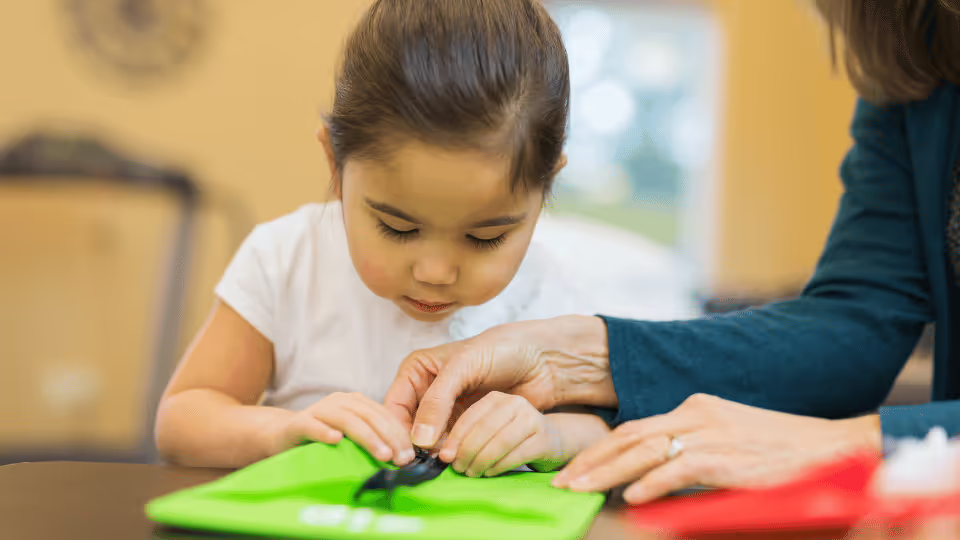
A woman assists a young girl with zippers, highlighting pediatric occupational therapy in Houston, Texas.

Pediatric occupational therapy plays a crucial role in helping children develop essential skills for daily living, including fine motor skills, sensory processing, and self-regulation. Depending on the setting, occupational therapists (OTs) provide specialized care to meet the unique needs of each child, whether in clinical, school, or in-home environments.

In a clinical setting, pediatric OTs typically work in hospitals, therapy centers, or specialized clinics, helping children address challenges like motor delays, sensory processing issues, and difficulty with daily tasks such as dressing, eating, or handwriting. In Houston, you may consider options such as Center of Developmental Pediatrics and Texas Children’s, which offer comprehensive occupational therapy services. We’ll explore these options further in a later section.

In school settings, OTs focus on helping students with physical, sensory, and coordination challenges that affect their academic performance and ability to participate in classroom activities. This could involve providing interventions for handwriting difficulties, promoting sensory regulation, or supporting children with physical tasks that impact their learning experience. OTs working in schools collaborate with teachers to ensure that students can access the curriculum and participate fully in the classroom environment.

In the in-home setting, pediatric OTs work directly with children in their familiar surroundings, providing personalized therapy that aligns with the child's daily routines and activities. In-home therapy offers the benefit of seeing the child in their natural environment, where therapists can address challenges as they arise in real-life situations. We'll explore the advantages of in-home occupational therapy in more detail in the following section.

Each setting provides distinct opportunities for pediatric OTs to support children's development in ways that best suit their individual needs, helping them overcome occupational barriers and thrive in their daily lives. Let’s dive a little deeper into some of the pros and cons of the two most popular types of occupational therapy: in-home and clinical. 

In-home vs. clinical occupational therapy

When it comes to occupational therapy, the setting in which therapy occurs can significantly impact the effectiveness and outcomes for clients. While both in-home and clinical (outpatient) therapy have their place, in-home therapy stands out as the superior option for many individuals. In-home therapy allows therapists to work directly within a person’s natural environment, tailoring the therapy to the client’s specific daily challenges. This personalized approach often leads to more meaningful and sustainable improvements in daily functioning.

One of the most compelling benefits of in-home occupational therapy is its focus on real-life activities. By assessing a client’s ability to perform tasks like self-feeding, brushing teeth, toileting and navigating their own home, therapists can provide practical, context-specific solutions that make a real difference. For instance, a therapist can observe how a person struggles to move around their house and suggest modifications to improve safety, such as adding grab bars, adjusting furniture placement, or recommending assistive devices. This level of customization is something clinical settings simply can’t replicate, as they lack the intimacy and everyday context of a home environment. In-home therapy empowers clients to work on the things that matter most to them in the place where they spend the majority of their time, leading to more immediate, functional results.

In contrast, while clinical occupational therapy offers specialized equipment and a controlled environment, it lacks the practical, personalized approach that comes with in-home therapy. Therapists may have access to advanced tools, but the clinical setting does not allow for real-time assessments of how a client interacts with their surroundings. Additionally, it can be harder for clients to transfer learned skills from a clinical space to their daily life without the same contextual connection that in-home therapy provides.

Ultimately, in-home occupational therapy offers a more holistic, customized experience that directly addresses the challenges individuals face in their everyday lives. It combines convenience, comfort, and personalized care in a way that simply cannot be matched in a clinical setting. For many clients, in-home therapy at Coral Care is the superior choice because it leads to more meaningful improvements in independence, safety, and overall quality of life.

Occupational therapy services in Houston

Houston is renowned for its exceptional services for occupational therapy, meaning families looking for occupational therapists have access to some of the best talent and professionals in the country. The state offers a variety of services that cater to different children and health goals, making it a top destination for those looking to get help for their children.

Below, we explore top services in Houston that reveal their excellence in pediatric occupational therapy care.

Coral Care’s occupational therapy

Coral Care’s services in Houston offers a comprehensive range of occupational therapy services designed to support children in their daily development at every stage. Their team of highly trained occupational therapists provides therapy for a variety of occupational needs, including fine and gross motor skills, sensory issues, and self regulation. Coral Care delivers services for in-home environments, allowing for a tailored approach based on each child’s unique needs. Whether through direct one-on-one therapy or home-based sessions that focus on real-world application, Coral Care’s offerings ensure that children receive the support they need to navigate life effectively, build confidence, and succeed academically and socially. With a focus on both assessment and ongoing support, Coral Care is committed to helping children achieve their full communicative potential.

Centers of Developmental Pediatrics, Houston

The Center for Developmental Pediatrics (CDP) in Houston provides comprehensive occupational therapy services to children with disabilities, aiming to improve their ability to perform daily tasks and engage in everyday activities. Through individualized therapy plans, CDP's skilled therapists help children build essential skills in areas such as fine motor development, sensory processing, and self-care. Their services also address visual-perceptual challenges, handwriting difficulties, and social-emotional skills, empowering children to thrive in both home and school environments. CDP’s family-centered approach ensures that parents are actively involved in the therapy process, receiving guidance and tools to support their child’s progress at home. By fostering a nurturing and supportive environment, CDP helps children reach their full potential, providing a valuable resource for families in the Houston area.

Texas Children’s, Houston

Texas Children's Hospital in Houston offers expert occupational therapy services tailored to children with disabilities, focusing on improving essential skills for daily living. Their team of skilled therapists provides individualized treatment plans for children experiencing developmental delays, fine motor difficulties, visual-perceptual challenges, and feeding or swallowing disorders. Occupational therapy at Texas Children's helps children develop independence in activities like dressing, feeding, and personal hygiene, as well as improving sensory processing and motor coordination. By addressing these key developmental areas, Texas Children’s empowers children to better engage in school, family activities, and community life. With a family-centered approach, therapists work closely with parents to provide ongoing support and guidance throughout the therapy process.

Services offered by occupational therapists in Houston

Occupational therapists in Houston offer a broad range of services designed to help individuals of all ages overcome challenges related to daily living and functional independence. Whether you’re managing a physical injury, recovering from surgery, or working through developmental delays, there are numerous specialists in Houston ready to create personalized therapy plans that meet your unique needs. OTs may focus on areas such as fine motor skills, activities of daily living (ADLs), cognitive rehabilitation, sensory integration, and assistive technology. By tailoring therapy to the specific needs of each patient, OTs in Houston help individuals improve their quality of life and regain independence.

Evaluation services

Evaluation services are a key component of occupational therapy. These assessments help identify any barriers or challenges that may be preventing a person from performing daily tasks. OTs use a variety of tools, including standardized assessments, functional evaluations, and feedback from family members or caregivers, to gain a comprehensive understanding of the person’s abilities. This thorough evaluation ensures that therapy plans are specifically designed to target the areas that will have the most significant impact on the individual’s daily life and well-being.

Pediatric and early intervention occupational therapy

Houston, and specifically Texas, is home to a number of highly skilled pediatric OTs who offer a wide range of specialized services. For families seeking top-notch care, programs like Coral Care are an excellent choice. Coral Care provides personalized, in-home therapy for children, making it easier for busy families to fit therapy into their hectic schedules. With flexible appointment times that can accommodate school, extracurriculars, and other activities, Coral Care’s therapists ensure therapy sessions are tailored to each child’s needs, all while providing expert guidance and support.

At Coral Care, the team of therapists has an average of 13 years of experience, which means you can trust your child will receive high-quality, professional care. Additionally, Coral Care’s no-waitlist policy ensures that families can get the care they need without delay—children are seen within two weeks of contacting the clinic. This commitment to accessibility and expert care makes Coral Care a standout choice for families seeking in-home occupational therapy.

Summary

In conclusion, Houston offers a diverse range of occupational therapy services, ensuring that individuals and families have access to high-quality care that fits their needs. Whether seeking clinical, school-based, or in-home therapy, practices like Coral Care stand out for their expertise, flexibility, and commitment to personalized treatment. From early intervention for children to specialized therapy for adults with injuries or chronic conditions, OTs in Houston provide the professional support needed to improve daily functioning, increase independence, and enhance overall well-being. Choosing the right occupational therapist is a crucial step in achieving long-term success, and programs like Coral Care offer the expertise and personalized care that can make all the difference. Schedule your consultation today and take the first step toward a more independent, fulfilling life.

Frequently Asked Questions

What occupational therapy services are available near Houston, Texas?

Houston families can access pediatric OT through Texas Children's Hospital, private clinics, and in-home providers. Early Intervention through ECI provides free OT for children under 3. Texas Medicaid and CHIP cover pediatric OT, and most commercial insurers do as well. In-home OT from providers like Coral Care is often the most practical option for Houston families given the city's geographic spread.


Related Blogs